
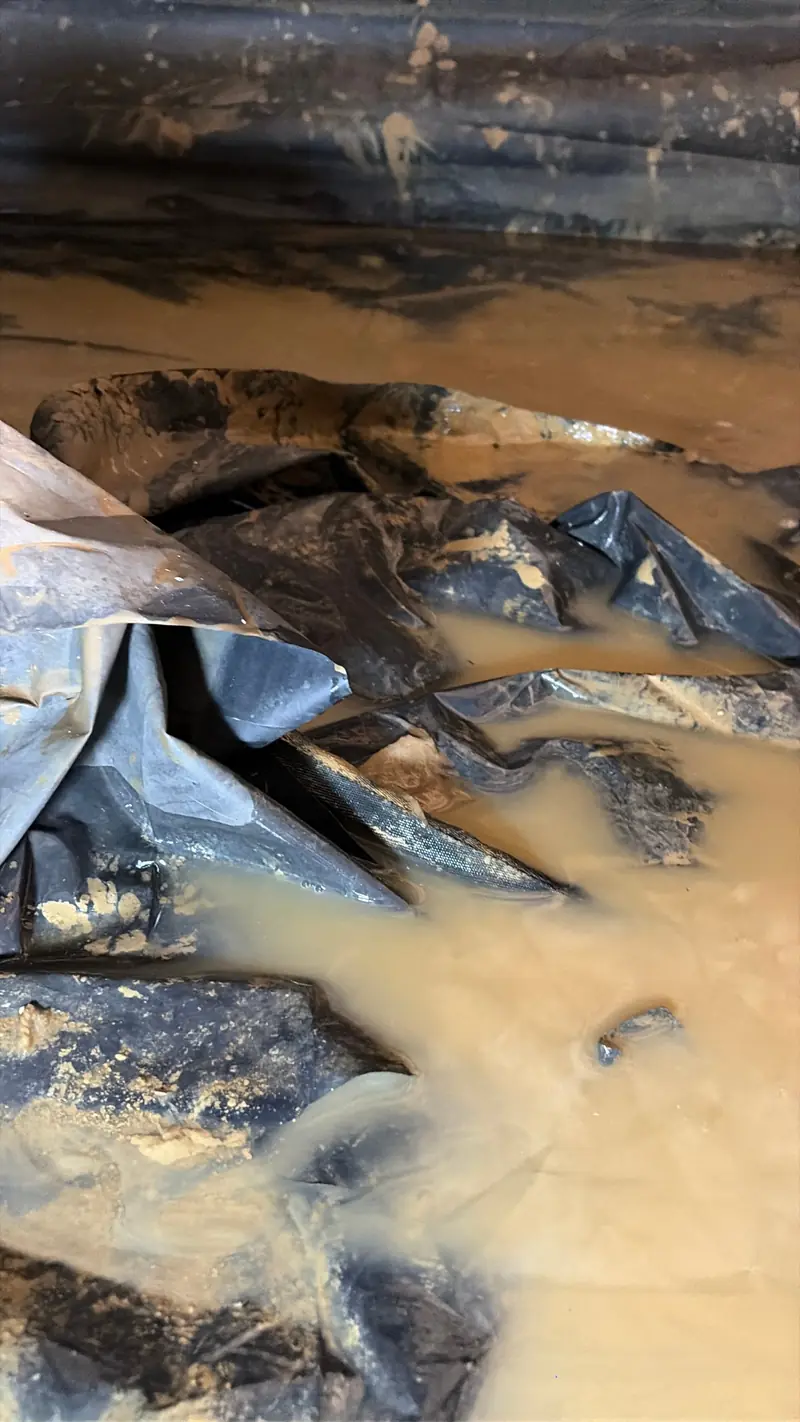
What we see in Castle Rock crawl spaces
Many homes in Castle Rock have been around for decades, and their crawl spaces often have thin plastic, uneven soil and low spots where water gathers after rain. Water trapped on top of old plastic is common — it can't soak in and can't drain out.
Designing a drain system for your home
- Find where water enters and where it settles
- Set perforated drain pipe in trenches through those areas and along the walls
- Route it to a gravity outlet or a sump basin
- Cover it with a new vapor barrier
Small fixes count
In smaller homes, a single downspout dumping at the foundation can be a big part of the problem. We'll point out outside fixes that could reduce the water reaching the crawl space, so you don't pay for more interior drainage than you need.
Wet wood and insulation
Water that has sat under a house for several winters often leaves damaged insulation and damp posts behind. We check those while we're there and include anything that needs attention in the estimate, clearly separated so you can prioritize.
What shapes a Castle Rock drainage job
- How much of the crawl space takes on water
- Whether water can drain by gravity or needs a sump
- Clearance under older homes
- Removing water-damaged plastic and insulation
- Outside fixes that could shrink the interior job
Questions from Castle Rock homeowners
Is a drain system the same as a sump pump?
They work together. Drain pipes collect the water; a sump pump moves it out. Many crawl spaces need both, and we install both.
How do I know if I need drainage or just new plastic?
Standing water or mud calls for drainage. Damp soil calls for a new vapor barrier. We'll look and recommend the right fix.
How do I get an estimate?
Getting started is easy. Call or text (360) 470-4956, or fill out the form on this page. We'll learn what's going on beneath your home, schedule a time to take a look, and give you a straightforward drainage estimate.