What crawl space encapsulation does
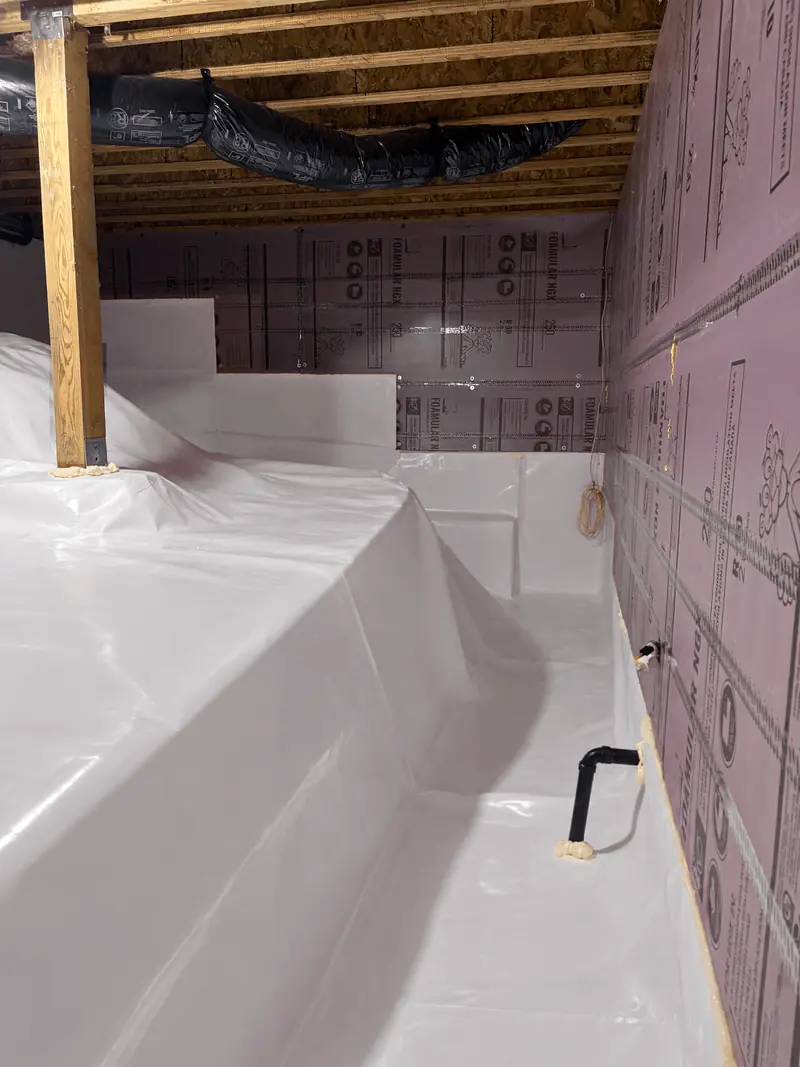
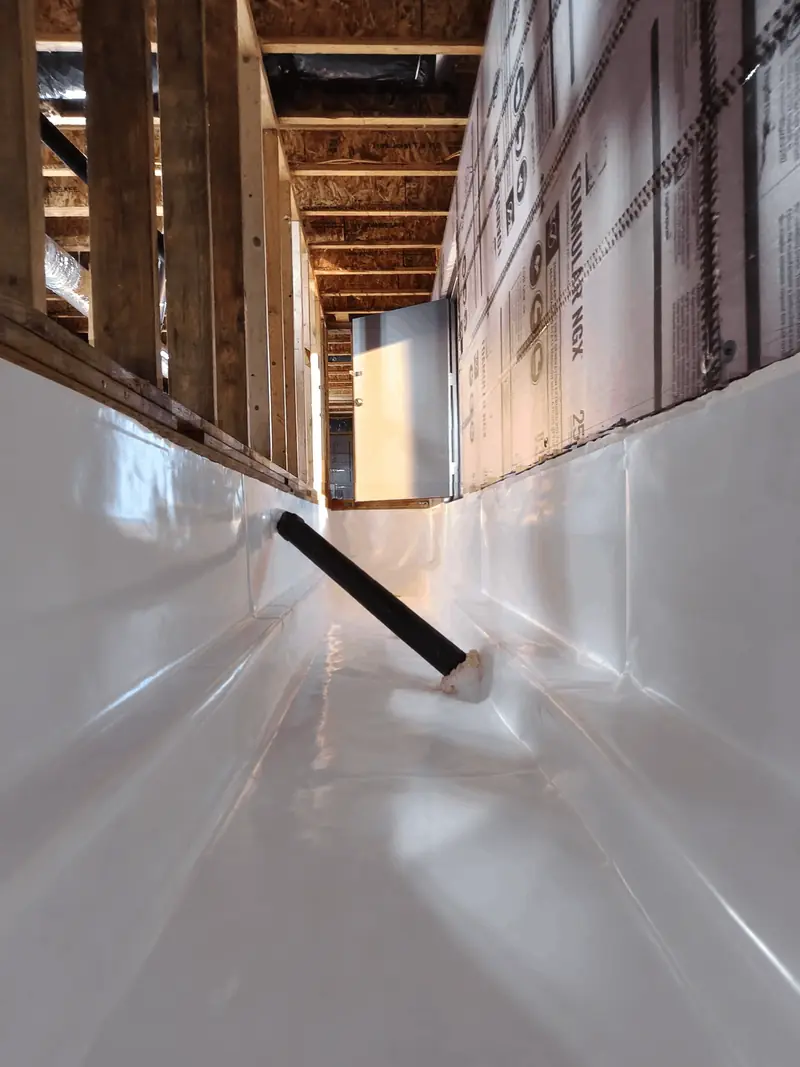
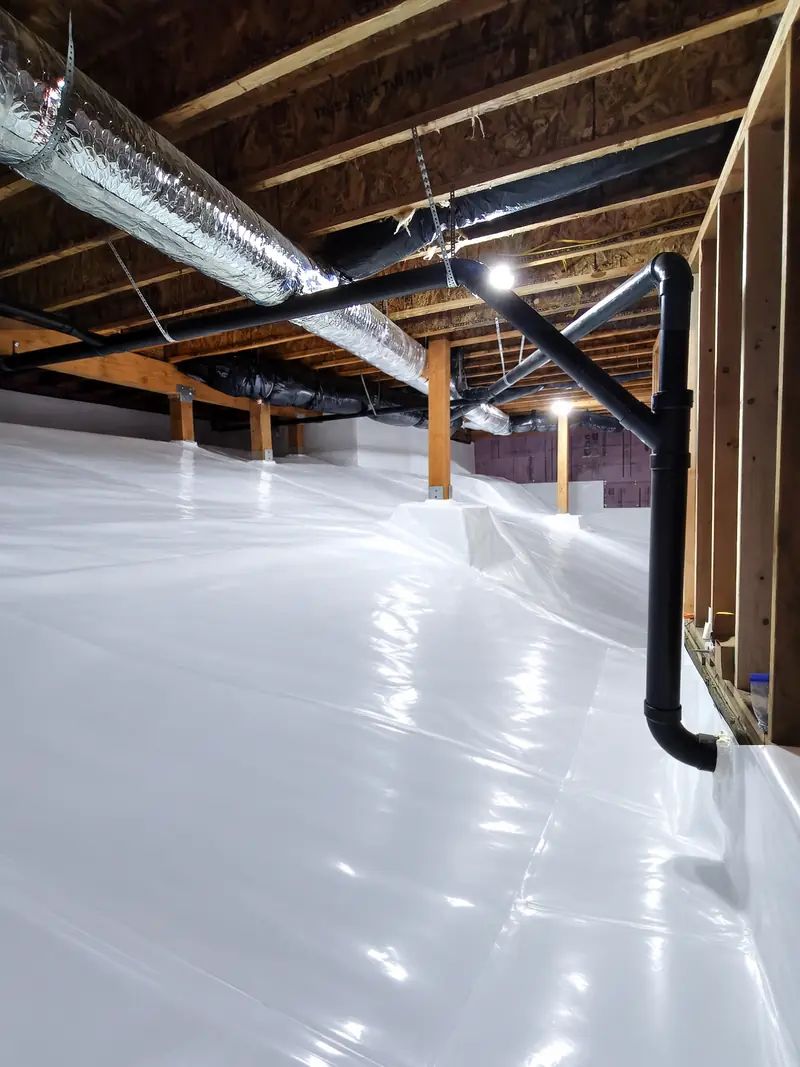
Encapsulation closes the crawl space off from the ground and outside air. A durable liner is installed over the soil and up the foundation walls, and seams and edges are sealed so damp air has fewer ways in.
In many homes, the result is a cleaner, drier crawl space that's easier to keep in good shape. Some homes also need drainage, a sump pump or humidity control as part of the system. If yours does, we'll explain why.
- Liner covers the ground and runs up the walls
- Seams and edges sealed
- Plan built around what we find during the inspection
- Clear scope and price before work starts
Our encapsulation process
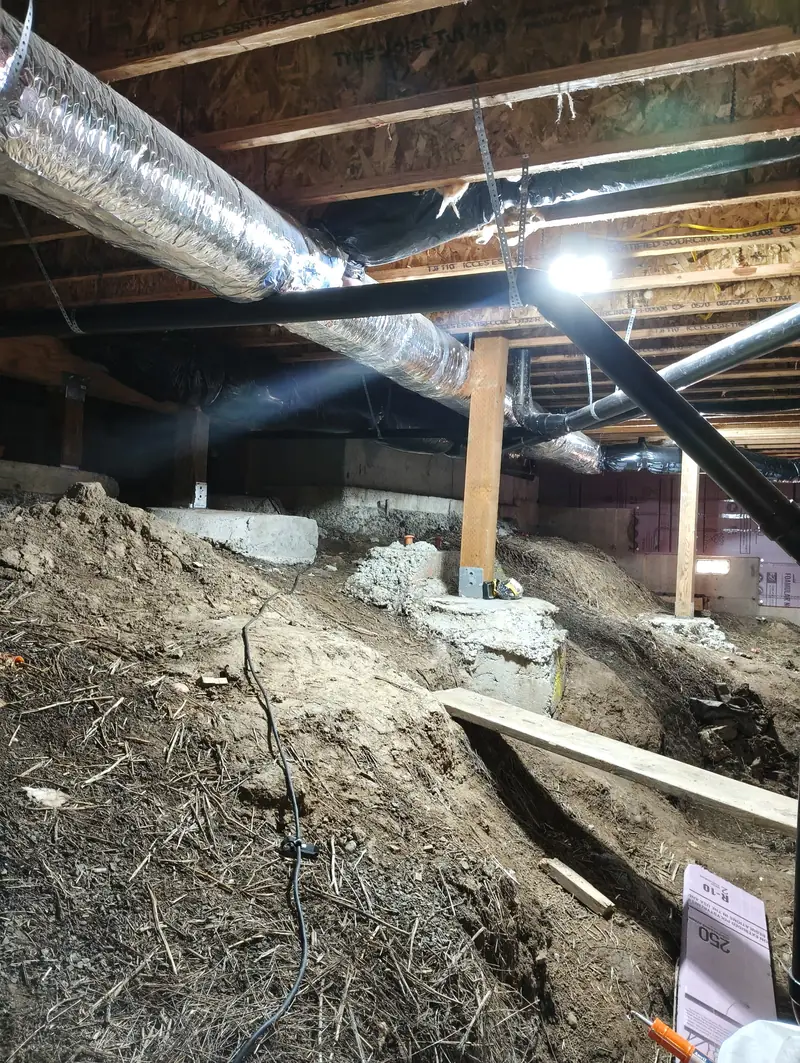
1. Crawl space cleanup. We remove debris, the old vapor barrier and any old or damaged insulation.
2. Drainage and vapor barrier installation. We lay down a dimple mat for enhanced drainage, then a white 20 mil vapor barrier over the crawl space floor that covers the ground and extends up the foundation walls.
3. Sealing and final touches. We seal off vents and pier pads and carefully seal every seam and edge of the vapor barrier to keep moisture out.
The result is a cleaner, drier space under your home that helps manage ground moisture, reduce musty smells and protect your home from water damage.
Built for Southwest Washington weather
Our wet season is long. Longview averages about 48 inches of precipitation a year, with November through January the wettest months. In a traditional vented crawl space, that damp outdoor air comes straight in through the vents while moisture rises from the soil below. Encapsulation shuts out both, so your crawl space stays drier through the months it matters most.
We plan every encapsulation around Washington's residential code for closed crawl spaces (WAC 51-51-0408) and walk you through the plan before any work begins.