
From mill town to one of the region's fastest-growing cities
Camas started as a paper-mill town — its first mill opened in 1883 — and was incorporated in 1906. It has grown quickly since: from about 12,500 people in 2000 to more than 26,000 in 2020. Lacamas Lake, the Washougal River and other bodies of water sit within the city, and Prune Hill, an extinct volcanic vent from the Boring Lava Field, rises above much of the newer development.
That mix produces two very different crawl space profiles: older homes closer to downtown that may have original materials and supports, and newer homes on slopes where the questions are more about drainage around the foundation and keeping the ground cover and insulation in good shape.
What Camas homeowners ask us about
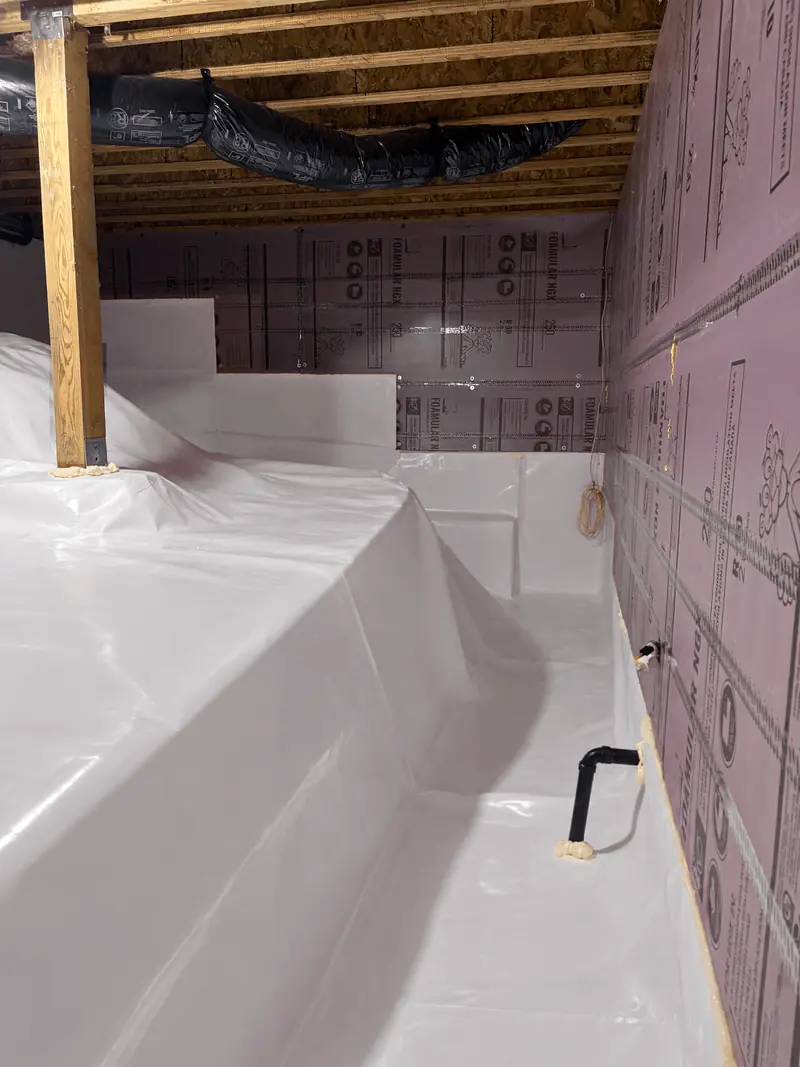
- Encapsulation in Camas — more control over crawl space moisture
- Vapor barriers in Camas — torn plastic after service work or inspections
- Drain systems in Camas — water that collects on sloped lots
- Insulation in Camas — fallen or missing batts
Sloped lots and water
On hillside lots, rain that soaks into the slope above a house can find its way toward the foundation. A crawl space on the uphill side of a home may stay damp longer or collect water in one corner. We look at where water is coming from — including gutters, downspouts and grading — before recommending drainage.
Serving Camas from Longview–Kelso
We're based in the Longview–Kelso area and serve Camas from there. No local office, no call center — you'll talk with the people doing the work and get a free, straightforward estimate.