
Water first, always
Woodland sits at the mouth of the Lewis River, protected by dikes completed in 1922, and it has still seen major floods — 1948 and 1996 among them. Most crawl spaces here don't flood from the river, but many do deal with high groundwater and saturated soil in the wet season. Encapsulation isn't designed to hold back liquid water. If your crawl space takes on water, drainage and a sump pump come first.
What encapsulation can do once water is handled
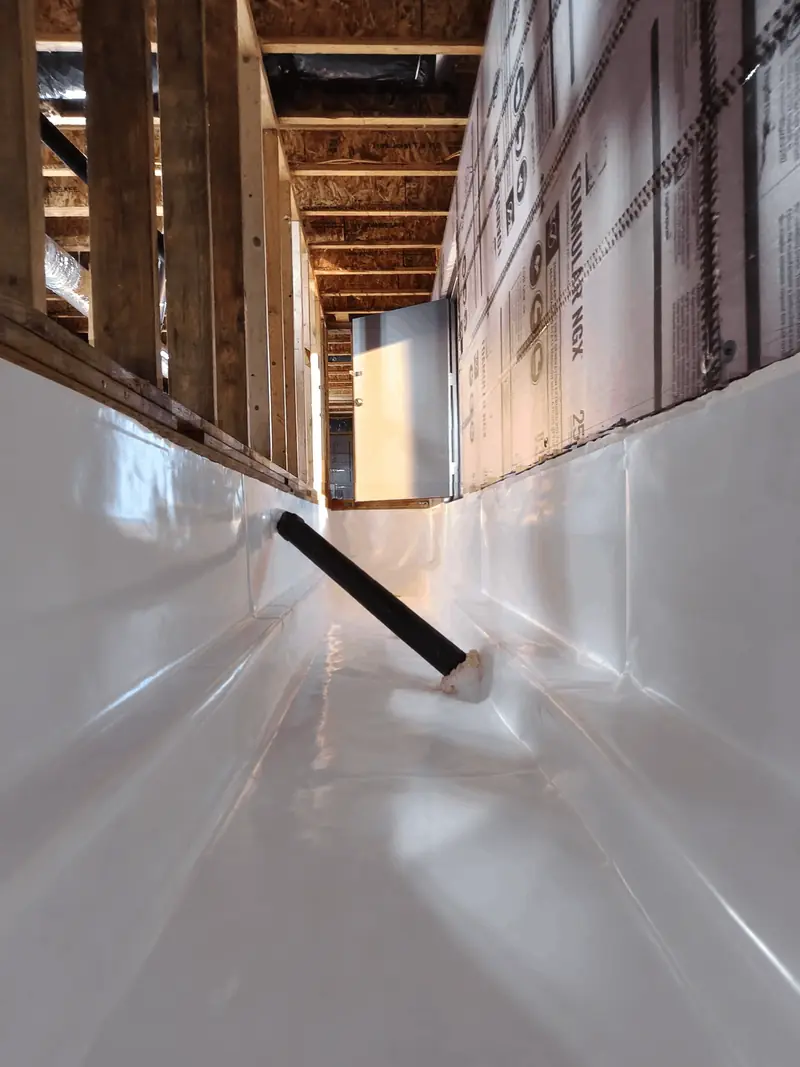
With water managed, encapsulation seals the crawl space from soil moisture and damp outdoor air. A liner runs over the ground and up the walls, seams are sealed and openings are addressed. That can mean less musty air, drier insulation and framing, and a cleaner space under your home.
After a wet season
If your crawl space has had water in it, there may be wet insulation, displaced plastic and debris to remove first. A cleanout is often the first step of a Woodland encapsulation project.
What shapes a Woodland encapsulation
- Water management first. Drain pipes and a sump, if needed, are often the biggest variable.
- Cleanup. Silty plastic and wet insulation left behind by past water.
- Floodplain considerations. Homes in mapped flood zones may have requirements for foundation openings that affect how the crawl space can be closed.
- Size and access. Square footage, height and obstructions.
- The air plan. How the sealed space will be managed through wet months.
We'll break the estimate into these pieces so you can see what's driving it.
Questions to settle before sealing
Before encapsulating a Woodland crawl space, it's worth knowing: Does water still get in after drainage? Is the property in a mapped floodplain, and what does that mean for vents? Where will a dehumidifier or other air management drain? Is the insulation going to stay under the floor or move to the walls? We'll walk through each one with you so there are no surprises after the liner is in.
Questions from Woodland homeowners
Can I encapsulate a crawl space that gets water every winter?
Only after the water is managed. Otherwise water gets trapped under or on top of the liner.
How do I get an estimate?
Getting started is easy. Call or text (360) 470-4956, or fill out the form on this page. We'll learn what's going on beneath your home, schedule a time to take a look, and give you a straightforward encapsulation estimate.