
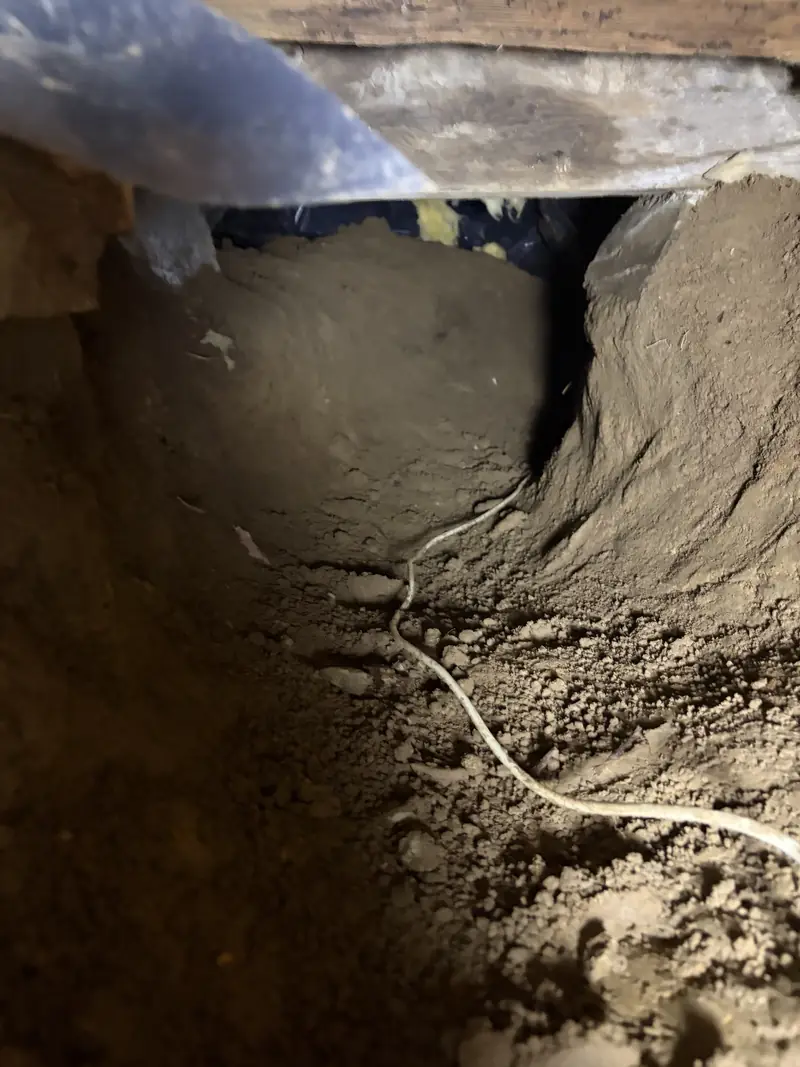
When it's needed
- Areas of the crawl space no one can reach
- Soil touching sill plates, joists or beams
- Repairs to posts or plumbing that need more room
- Mounded soil left from original construction
Signs a dig out may help
You may not see the crawl space often, but these clues suggest a dig out could be worth discussing: a home inspector noted "limited access" or "inaccessible areas"; a plumber or electrician couldn't reach a problem; there's soil touching the sill or joists near the hatch; or parts of the floor above have never had insulation because no one could get there. In older Castle Rock homes, opening up those areas often reveals problems that have gone unnoticed — and makes them fixable.
The work
Mostly hand digging in tight spaces: access trenches, lowered high spots and soil pulled back from wood. We plan around footings and piers so they stay supported.
Usually part of a bigger job
Dig outs in Castle Rock are often the first step before post and beam repair or a new vapor barrier.
What drives the cost in Castle Rock
- Soil volume
- Access and working room
- Soil handling
- Follow-on repairs
Part of the plan
A dig out is usually the step that makes other repairs possible. We'll price it alongside the work it enables so you see the whole picture.
Questions from Castle Rock homeowners
Why does soil touching wood matter?
Wood in contact with soil stays damp and is more prone to rot and pests.
Can a dig out be combined with other work?
Yes, and it usually is.
How do I get an estimate?
Getting started is easy. Call or text (360) 470-4956, or fill out the form on this page. We'll learn what's going on beneath your home, schedule a time to take a look, and give you a straightforward dig out estimate.