
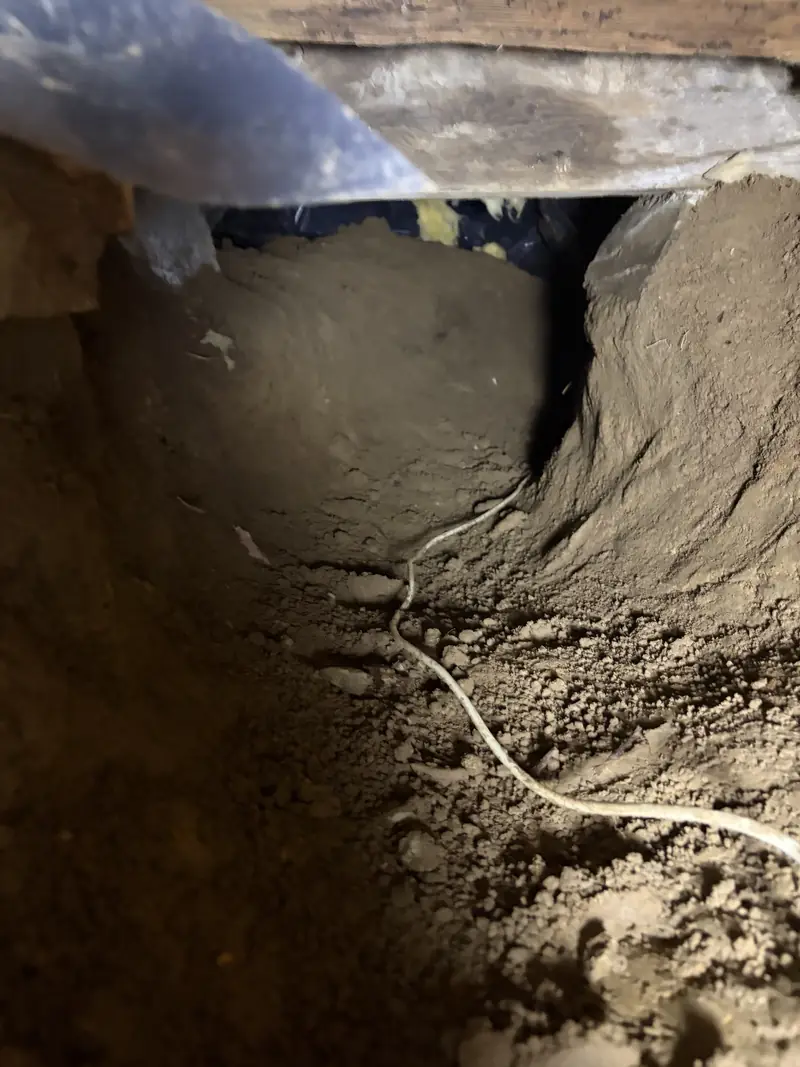
Why dig out
To reach blocked areas, get soil away from wood framing, or make room for repairs and drainage trenches. In low crawl spaces, these jobs often can't happen without it.
Soil handling
Excavated soil has to go somewhere. Where the crawl space has low areas that need filling, soil can sometimes be redistributed. Otherwise it's bagged and removed. In Woodland, we avoid raising the grade near walls in a way that would direct water toward the foundation, and we coordinate soil handling with the drainage layout so the finished floor slopes toward the drain pipes and sump.
Water awareness
Then finish it
A new vapor barrier over the reshaped ground keeps the space clean and drier.
What affects the scope in Woodland
- Soil volume and depth
- Seasonal groundwater level
- Drainage and sump planned with it
- Soil handling
Best timing
Digging when groundwater is low — typically late summer and early fall — makes the work easier and lets drainage go in before the wet season.
Questions from Woodland homeowners
Will digging out make my Woodland crawl space flood?
We plan drainage with every dig out, so water that reaches the lowered area has somewhere to go.
Is a dig out always needed for drainage?
A dig out is the answer when there isn't room to trench. We'll measure your crawl space and recommend the right approach.
How do I get an estimate?
Getting started is easy. Call or text (360) 470-4956, or fill out the form on this page. We'll learn what's going on beneath your home, schedule a time to take a look, and give you a straightforward dig out estimate.