
Hillside factors
- Tall posts on the downhill side that may need bracing or better connections
- Uphill piers in soil kept damp by water moving through the slope
- Newer lots where backfill is still settling
How leveling is done
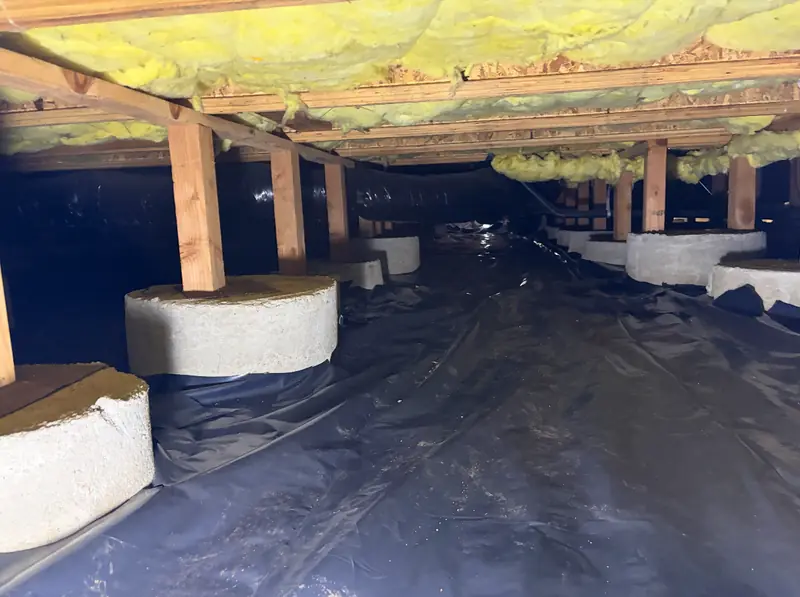
Leveling a floor in a crawl space home means carefully raising the low areas back toward level by adjusting the supports beneath them. Temporary supports take the load while posts or piers are replaced or adjusted, and the floor is raised gradually — sometimes over more than one visit for floors that have sagged a long time. On Camas hillside homes, tall downhill posts may be replaced or braced at the same time. The pace matters: raising a floor too quickly can crack drywall or bind doors.
Older Camas homes
Near downtown, homes from Camas's mill-town years can have original supports that have rotted or settled. Leveling there is similar to other older homes: replace, add and adjust carefully.
The work
Repair or add posts and piers, adjust gradually, and fix the moisture or drainage problem that contributed. We'll walk you through the plan before work begins.
What affects the scope in Camas
- Tall downhill posts needing replacement or bracing
- Uphill piers in damp soil
- Settling backfill on newer lots
- Drainage to stabilize supports
- Floor adjustment
New lots settle
Some settling on newly built lots is normal. Floors that keep changing, though, are worth investigating early — fixes are usually simpler before damage spreads to finishes.
Questions from Camas homeowners
Why does my Camas floor bounce on the downhill side?
Tall, under-braced posts or long spans are common causes.
Can drainage help prevent settling?
Keeping soil around piers from staying saturated helps. We'll look at it.
How do I get an estimate?
Getting started is easy. Call or text (360) 470-4956, or fill out the form on this page. We'll learn what's going on beneath your home, schedule a time to take a look, and give you a straightforward floor leveling estimate.