
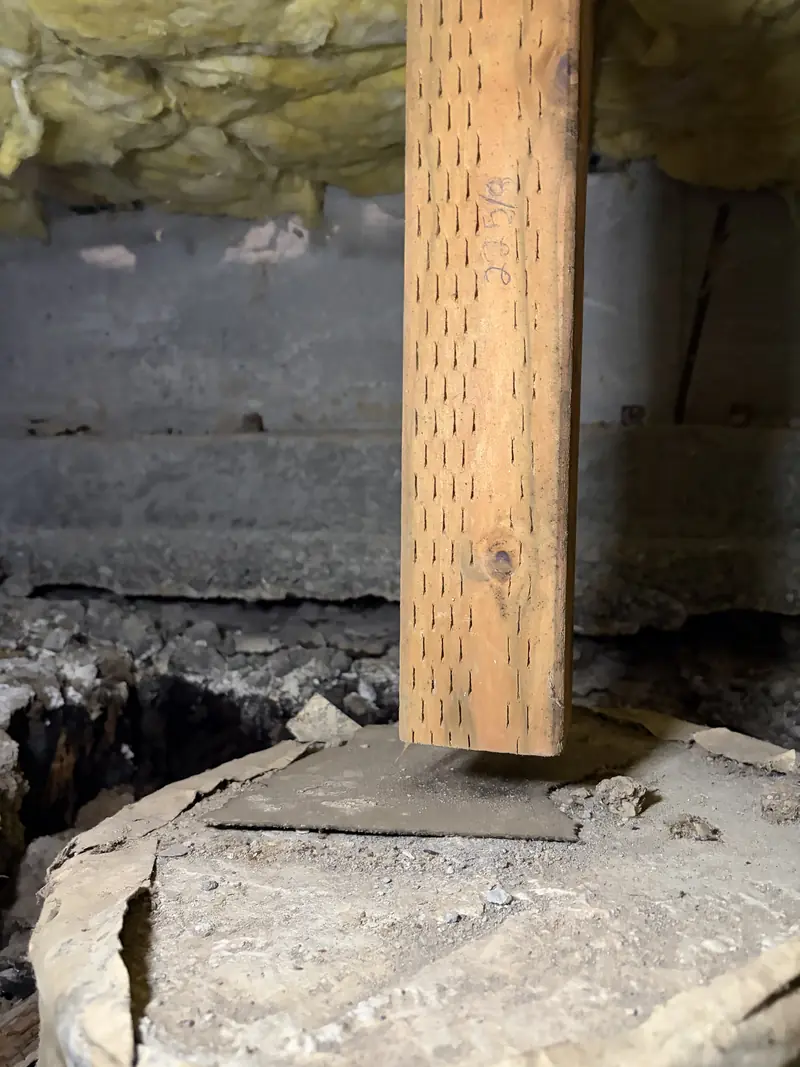
What can go wrong under a Kelso home
- Rot in posts and beams where wood sits in damp soil or touches wet concrete
- Settled piers, especially where soil around them stays saturated through the wet season
- Improvised supports — scrap posts, stacked blocks — in older homes
- Missing connections that let posts shift
Hillside homes
On a slope, piers on the downhill side can be taller and more exposed, and water moving through the hill can soften the soil they sit on. We look at each support individually. Kelso's history with the Aldercrest–Banyon slide is a good reason not to guess.
The repair
Replacing damaged posts, adding support where spans are long, replacing failed pier blocks, adding connectors and carefully reducing sag where possible. If floors are noticeably out of level, see floor leveling in Kelso. If the concrete is involved, see foundation repairs in Kelso.
What affects the scope in Kelso
- Number of failed supports. One area or several.
- Pier replacement. Settled or cracked piers in saturated soil.
- Slope. Tall downhill posts may need bracing and stronger connections.
- Water. Drainage to keep soil under new piers from staying soft.
- Engineering. Needed only if signs point beyond individual supports.
Watching for change
A floor that's been slightly off for years and hasn't changed is a different situation from one that has moved recently. If you notice new slope, new cracks or doors that suddenly bind — especially after a wet winter on a hillside lot — call sooner rather than later.
Questions from Kelso homeowners
My Kelso floor sloped more after a wet winter. Why?
Saturated soil can let a pier settle, and damp wood can weaken. We'll check the supports in that area.
Do you replace pier blocks?
Yes, as part of post repairs.
How do I get an estimate?
Getting started is easy. Call or text (360) 470-4956, or fill out the form on this page. We'll learn what's going on beneath your home, schedule a time to take a look, and give you a straightforward post and beam repair estimate.