
Two common situations
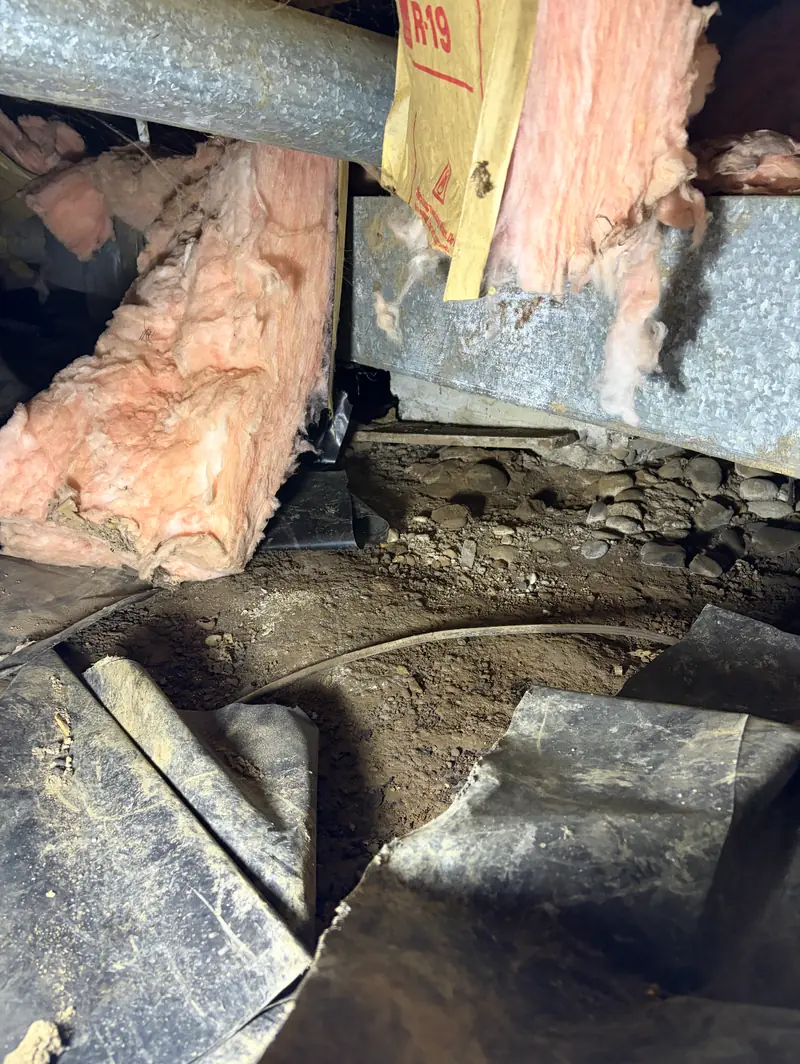
Newer homes: lumber scraps and packaging left under the house during construction. Wet crawl spaces: in an area averaging over 52 inches of precipitation a year, crawl spaces that collect water often end up with fallen, soggy insulation and plastic covered in silt.
Cleaning up after water
When water has been sitting in a Battle Ground crawl space, it leaves more than puddles. Insulation absorbs water and falls. Plastic gets coated in silt and shifts. Debris floats and settles in new places. Wet materials left in place keep the space humid long after the water drains. A post-water cleanout removes those materials so the soil and framing can dry and be inspected. We'll check posts and piers that sat in water, note any framing that stayed wet, and plan the order of the next steps — typically drainage, then a new barrier and insulation — so the crawl space doesn't end up back where it started next winter.
The cleanout
- Remove debris, damaged plastic and wet insulation
- Haul it away
- Walk you through what we see
Next steps
If water caused the mess, drainage should come next, followed by a new vapor barrier and insulation.
What affects the scope in Battle Ground
- Construction debris left behind
- Wet insulation and silty plastic
- Access and haul-away
- Drainage planned with it
Clean start, then fix the cause
If water caused the mess, a cleanout without drainage means you may be cleaning up again next winter. We'll plan the two together.
Questions from Battle Ground homeowners
Should I clean out the crawl space before fixing the water?
Often they happen together. We'll plan the sequence.
Do you haul everything away?
Yes.
How do I get an estimate?
Getting started is easy. Call or text (360) 470-4956, or fill out the form on this page. We'll learn what's going on beneath your home, schedule a time to take a look, and give you a straightforward cleanout estimate.