
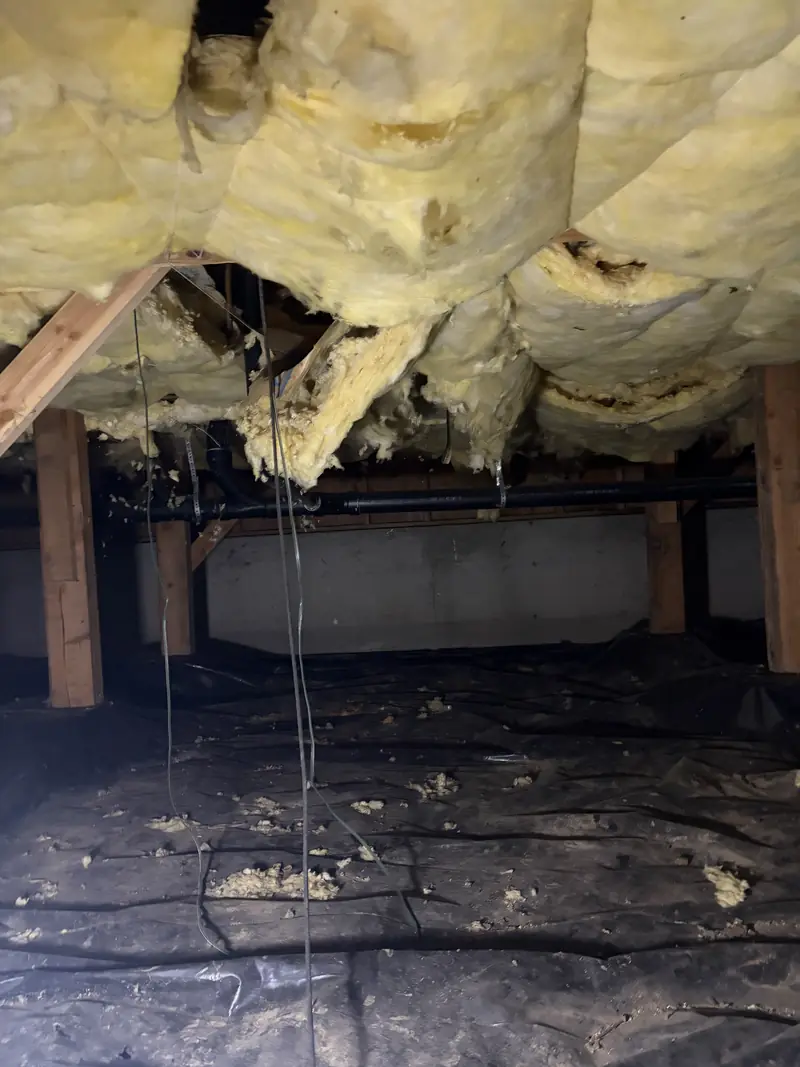
Newer homes, same problem
Many Battle Ground homes were built in the last 20 years and started with floor insulation. But batts fall when supports fail or weren't installed well, and they absorb moisture when the ground cover is torn or water collects. Service visits for plumbing, HVAC and cable also leave gaps.
Keeping new insulation in place
Insulation in a crawl space has to stay pressed against the subfloor to do its job. That means proper supports between the joists, especially in wetter climates where batts can absorb some moisture and get heavier. We install supports so the insulation stays in contact, and we check that the barrier below is intact so moisture from the soil isn't feeding the insulation from underneath.
What we do
- Remove fallen and damp insulation
- Fix the moisture source — a vapor barrier repair or drainage
- Install new insulation, properly supported
Check for water first
If water has been collecting in your crawl space, insulation is a symptom, not the problem. When drainage needs to come first, we handle that too.
What affects the scope in Battle Ground
- Extent of fallen or damp insulation
- Water conditions in the crawl space
- Barrier repair
- Supports to hold insulation in place
- Floor area
Why newer insulation falls
Batts that were friction-fit without enough support, insulation pulled down during service calls, and moisture from torn plastic are common culprits. Fixing those causes keeps the new insulation where it belongs.
Questions from Battle Ground homeowners
My Battle Ground home is new. Why is the insulation falling?
Failed supports, moisture or disturbance from service work are the usual reasons.
Do you remove the old insulation?
Yes.
How do I get an estimate?
Getting started is easy. Call or text (360) 470-4956, or fill out the form on this page. We'll learn what's going on beneath your home, schedule a time to take a look, and give you a straightforward insulation estimate.