
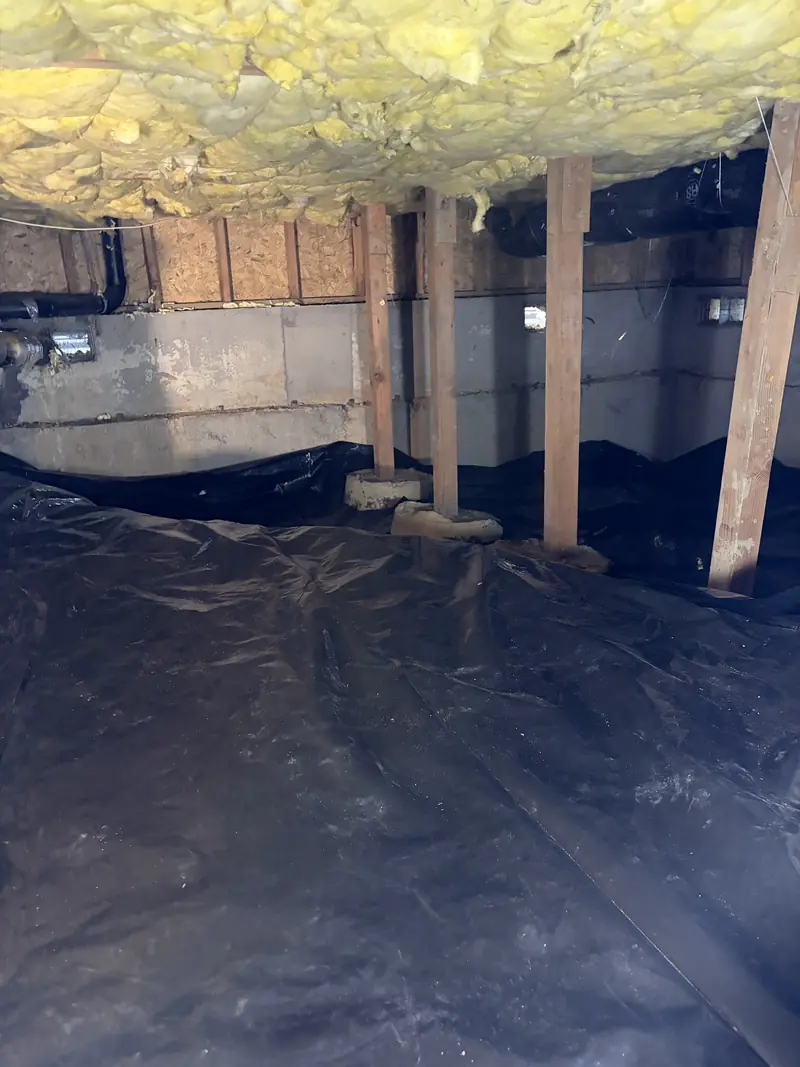
Newer-home causes
- Pier blocks settling in soil that stays wet — Battle Ground averages more than 52 inches of precipitation a year
- Posts that were never fastened, or shifted
- Supports disturbed during later work
- Lots where fill soil is still settling
How leveling works in a newer home
In newer Battle Ground homes, leveling is usually about correcting a few supports rather than rebuilding a beam line. Temporary support takes the load, a settled pier is reset on a sound base or a shifted post is replaced and fastened, and the floor is brought back up gradually. Because the framing hasn't had decades to take a set, newer floors often respond well. We'll also look at drainage around the piers so the soil beneath them doesn't stay soft.
The fix
Reset or replace settled piers, fasten or replace posts, add support where needed and adjust gradually. If water is collecting around the piers, drainage helps keep the repair stable.
Documentation
If you're discussing the issue with a builder, we can describe and photograph what we find.
What affects the scope in Battle Ground
- Number of settled piers or shifted posts
- Water conditions around piers
- Floor adjustment
- Supports disturbed by later work
- Documentation needs
Catch it early
In newer homes, uneven floors caught early are usually a straightforward fix. Waiting can let drywall cracks and door problems spread. If something feels off, it's worth a look.
Questions from Battle Ground homeowners
Should a newer home have uneven floors?
It shouldn't, but settling and support issues happen. We'll find the cause.
Can wet soil cause settling?
Saturated soil can let piers sink. It's one of the things we check.
How do I get an estimate?
Getting started is easy. Call or text (360) 470-4956, or fill out the form on this page. We'll learn what's going on beneath your home, schedule a time to take a look, and give you a straightforward floor leveling estimate.