
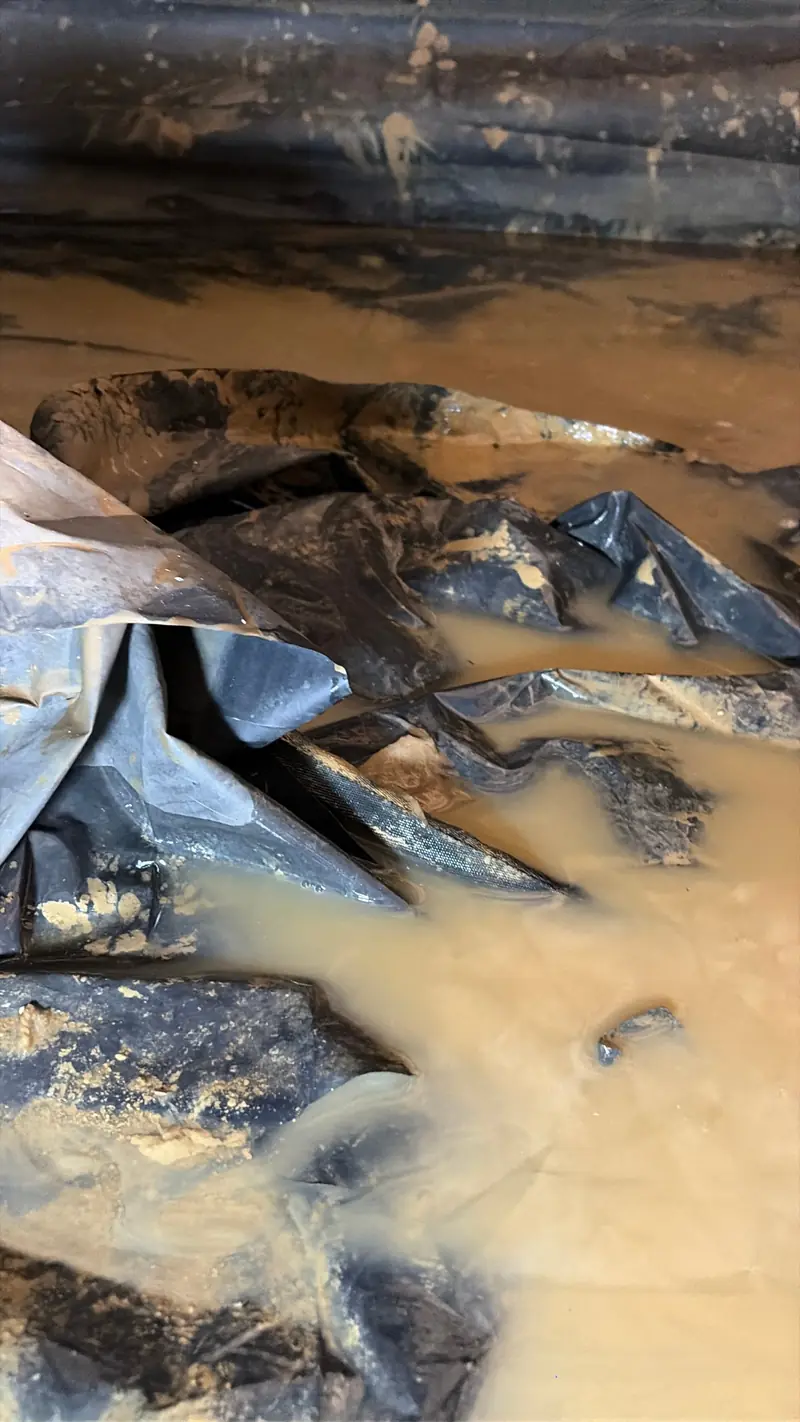
Gravity or pump?
We check whether there's a safe downhill outlet for collected water. If there is, drain pipes sloped to it carry the water away. If not, a sump basin and pump move it out.
How a sump system is put together
A crawl space sump system has a few parts. The basin is a liner set into the soil at the low point, usually with gravel around it so water can flow in. Drain pipes, if used, slope toward it. The pump sits in the basin and switches on when water rises to a set level. The discharge pipe carries water up and out through the foundation or rim, with a check valve so pumped water doesn't flow back. A lid keeps debris out, and the vapor barrier is sealed around the basin so the space stays clean. On sloped Camas lots, the discharge route is planned so water ends up downhill and away from the house — not released where it can soak back toward the foundation.
The installation
- Basin at the low point
- Pump and discharge routed away from the house
- Lid and barrier sealed around it
Where the water goes
On hillside lots, discharged water shouldn't be released where it can run back toward your home or onto a neighbor's. We plan it carefully.
What affects the scope in Camas
- Gravity outlet availability
- Basin location
- Discharge on slopes
- Drain pipes
Fewer moving parts
Where gravity drainage works, it avoids a pump entirely. Where it doesn't, a sump is reliable when maintained.
Questions from Camas homeowners
Can my Camas crawl space drain without a pump?
On some sloped lots, yes.
Do you replace failing sump pumps?
Yes.
How do I get an estimate?
Getting started is easy. Call or text (360) 470-4956, or fill out the form on this page. We'll learn what's going on beneath your home, schedule a time to take a look, and give you a straightforward sump pump estimate.