
Why it matters here
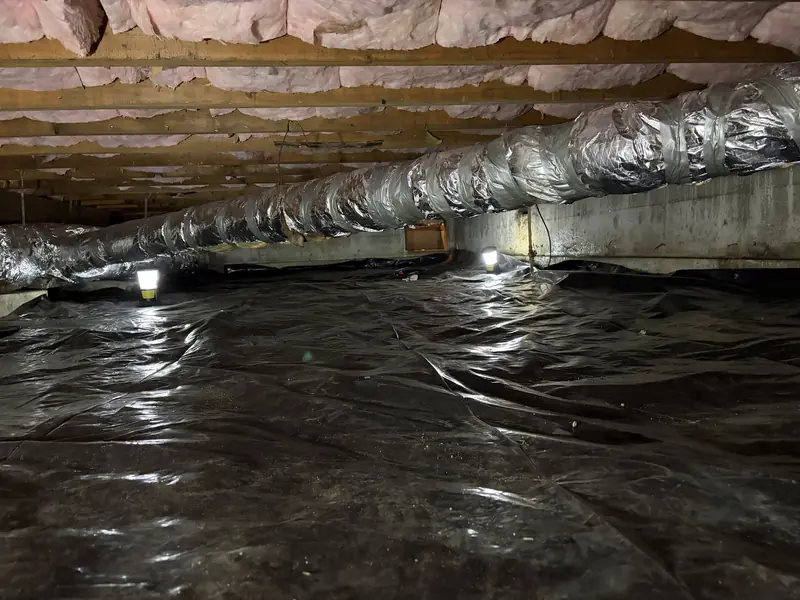
Bare soil releases moisture into the crawl space. In Longview's long wet season, that moisture feeds damp insulation, earthy smells and wood that stays damp. Washington's code calls for a ground cover in vented crawl spaces — six-mil black polyethylene or an approved equal, seams overlapped at least six inches, extending to the foundation walls (WAC 51-51-0408). Many older homes predate that or have plastic that's long past its life.
What we do
- Remove old, torn and dirty plastic and debris
- Cover the soil completely with new plastic
- Overlap seams and fit carefully around piers and pipes
- Run the barrier to the foundation walls
Water? Fix that first
If water pools in your crawl space during the wet months, a new barrier just covers a puddle. We'll recommend drainage first if it's needed.
What affects the cost of a vapor barrier in Longview
- Crawl space square footage
- Removal of old plastic and debris
- Number of piers, posts and pipes to fit around
- Clearance and obstructions
- Material chosen
It's usually one of the more affordable crawl space improvements — and one of the most useful.
Keep it in good shape
After a new barrier goes in, ask anyone who works under your home — plumbers, cable installers, inspectors — to take care with it. If it gets torn, a small patch is easy; a barrier left torn through a Longview winter lets moisture back in.
Questions from Longview homeowners
How do I know if my Longview home needs a new barrier?
Exposed soil, torn or shredded plastic, sheets that no longer overlap, or water/mud on top are the usual signs.
Do you remove the old plastic?
Yes.
Will a new barrier help with musty smells?
If they come from damp soil, often yes.
How do I get an estimate?
Getting started is easy. Call or text (360) 470-4956, or fill out the form on this page. We'll learn what's going on beneath your home, schedule a time to take a look, and give you a straightforward vapor barrier estimate.