
Why Longview homeowners ask about encapsulation
Longview averages about 48 inches of precipitation a year, and most of it falls from fall through spring. In a traditional vented crawl space, the vents let in that same humid outdoor air, while bare soil or worn plastic adds more moisture from below. The result in many older Longview homes is a crawl space that smells earthy in winter, insulation that sags, and wood that stays damp longer than it should.
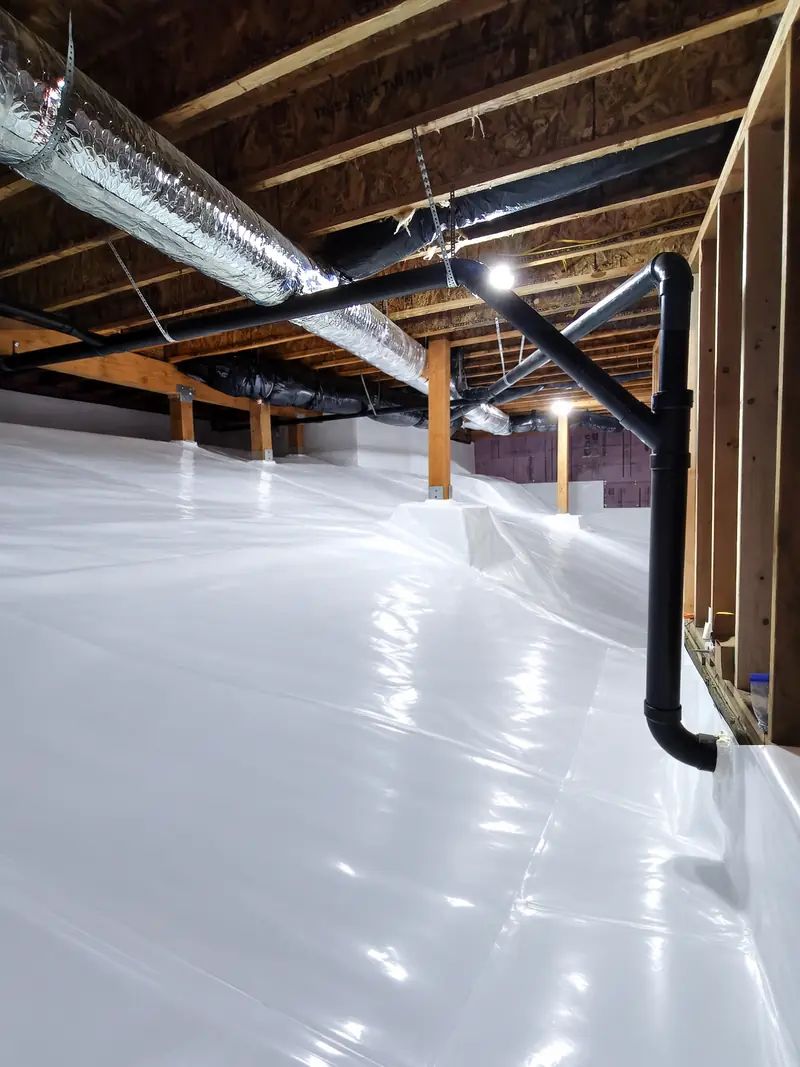
Encapsulation closes the crawl space off: a heavier liner goes over the ground and up the foundation walls, seams are sealed, and openings to the outside are addressed so the space can be managed rather than left to the weather.
Older homes need a closer look first
Much of Longview was built between the 1920s and the 1960s. Before sealing up an older crawl space, we check what's already there: the condition of posts and piers, any rot in sills or joists, old ductwork, and whether past repairs left debris behind. Sealing a crawl space over problems just hides them. We take care of anything that needs fixing first — or clearing out — then seal the space.
Water before liner
Longview sits on low ground where the Cowlitz meets the Columbia. If your crawl space collects water in the wet months, that has to be managed with drainage or a sump pump before encapsulation. A liner over standing water is not a fix, and we won't sell it as one.
What shapes the scope of a Longview encapsulation
No two Longview crawl spaces are quite alike, and the size of the job usually comes down to a handful of things:
- Square footage and height. A roomy 1960s crawl space is faster to line than a tight 1920s one with low spots and obstructions.
- What has to come out first. Old plastic, fallen batts and construction debris are common in older homes and need to be removed before a liner goes down.
- Piers, posts and pipes. Every penetration is a place the liner has to be cut, fitted and sealed.
- Vents and access. Older foundations may have many vent openings to address.
- The air plan. Whether the closed space will be managed with a dehumidifier or another approach.
We list these items in the estimate so you can see where the cost comes from.
How encapsulation fits with other work under a Longview home
Encapsulation is usually one of the last steps, not the first. In a typical older Longview crawl space, the order looks something like this: clear out debris and old material, fix any damaged posts or beams, deal with wet-season water, settle the insulation plan, and then seal the space. Doing it in that order means nothing has to be torn back out later. If you only want to tackle part of it now, we'll help you prioritize.
Questions from Longview homeowners
Does encapsulation make sense in an older Longview home?
Yes. We start by checking the framing, piers and drainage, take care of anything that needs attention, then seal the crawl space for a clean, dry finish.
My crawl space is only damp in winter. Do I need encapsulation?
Seasonal dampness is common here, and it's worth handling. We'll recommend a new vapor barrier or full encapsulation based on what we find under your home.
Will encapsulation help with musty smells in my Longview home?
When the smell comes from damp soil and crawl space air, it often helps. We check for other sources too.
How do I get an estimate?
Getting started is easy. Call or text (360) 470-4956, or fill out the form on this page. We'll learn what's going on beneath your home, schedule a time to take a look, and give you a straightforward encapsulation estimate.