
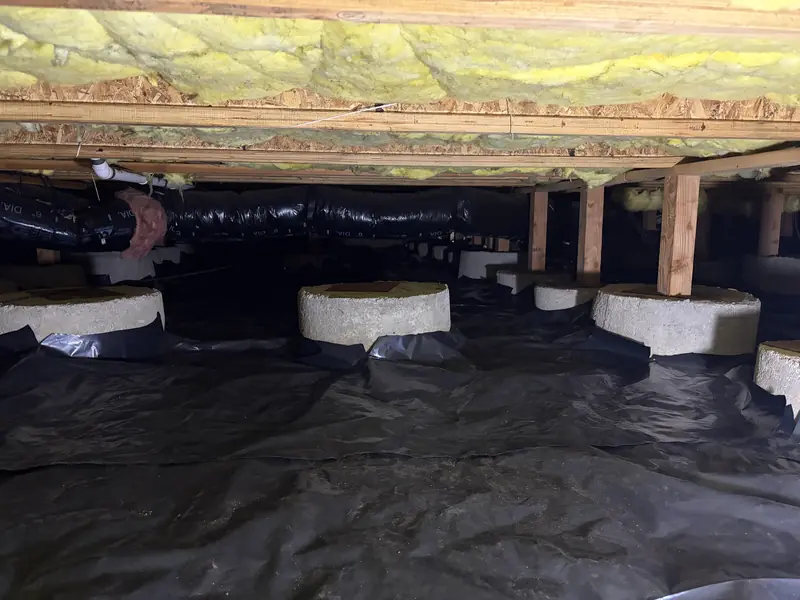
When to replace it
- Exposed soil anywhere in the crawl space
- Tears and holes from foot traffic
- Seams that no longer overlap
- Water or mud on top
- A home inspection that flagged it
Choosing a material
Washington's code baseline for vented crawl spaces is six-mil black polyethylene or an approved equal. Heavier and reinforced materials hold up better where people crawl regularly, such as paths to the furnace, water heater or plumbing. We'll recommend a material that fits how your Vancouver crawl space is used and explain the trade-offs in cost and durability.
The installation
We remove the old plastic, cover the soil completely with overlapped seams, fit around piers and pipes, and run the barrier to the foundation walls. Washington's code baseline for vented crawl spaces is six-mil black polyethylene or an approved equal; we'll recommend the right material for your home.
What affects the cost in Vancouver
- Square footage
- Old plastic removal
- Obstructions like ducts and plumbing
- Material choice
- Repairs vs. full replacement
Repair or replace
In newer Vancouver homes with mostly sound plastic, targeted repairs restore the barrier. In older homes with thin or missing plastic, replacement is the better value. We'll recommend the right option.
Questions from Vancouver homeowners
My home inspector flagged the vapor barrier. What now?
Send us the report section and we'll inspect and quote the fix.
How long does a barrier last?
A quality barrier lasts for years, especially in a crawl space that isn't disturbed often.
How do I get an estimate?
Getting started is easy. Call or text (360) 470-4956, or fill out the form on this page. We'll learn what's going on beneath your home, schedule a time to take a look, and give you a straightforward vapor barrier estimate.