
Different homes, different reasons
Vancouver's housing runs from older homes near the historic core to neighborhoods built in the last couple of decades — the city added roughly 10,000 housing units between 2000 and 2010 alone. In older homes, encapsulation often comes up because of musty air, old plastic and tired insulation. In newer homes, it's usually about wanting a cleaner, drier crawl space or fixing condensation on ducts that run under the floor.
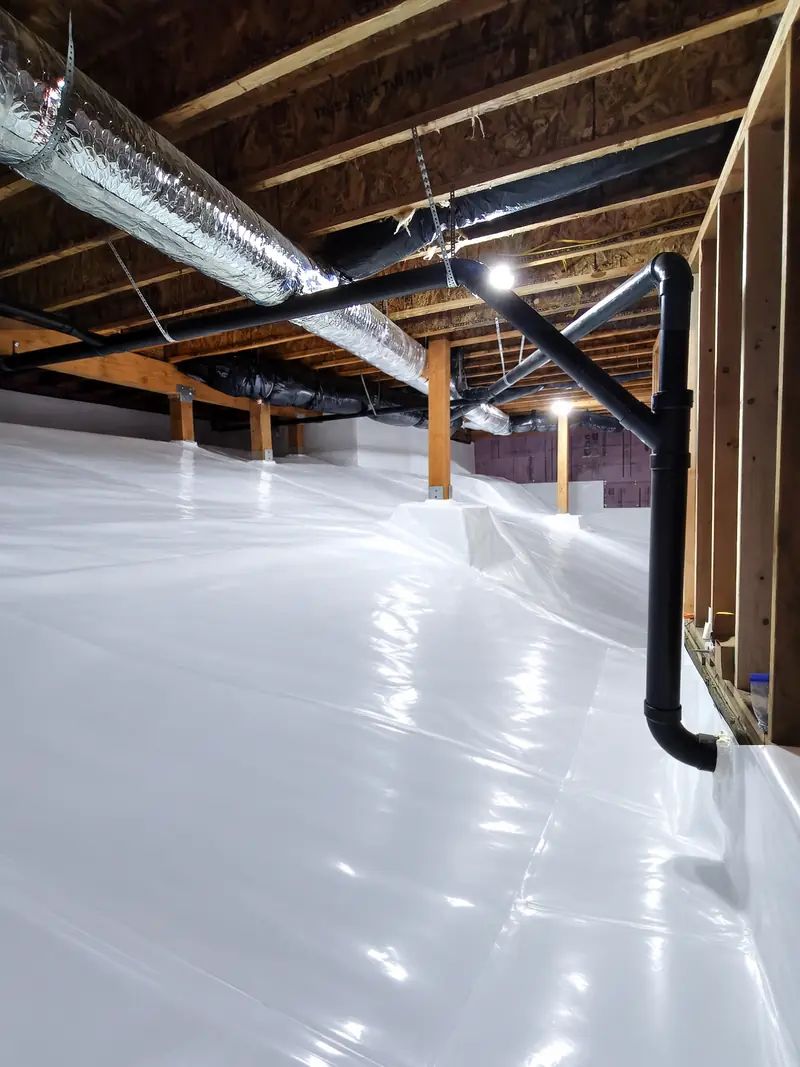
What a Vancouver encapsulation includes
- Removing old plastic and debris
- Laying a durable liner over the soil and running it up the foundation walls
- Sealing seams, edges and around piers and penetrations
- Addressing foundation vents and other openings
- Planning how the air in the closed space will be managed
Code and permits
Washington's residential code allows unvented crawl spaces when specific conditions are met — including a continuous, sealed Class I vapor retarder carried up the stem wall and the radon provisions the code references. How a closed crawl space ties into the home's heating and ventilation also matters. We plan around those requirements and will tell you if your project needs a permit.
The rain season and timing
Rain falls often in Vancouver from fall through spring and tapers off by mid-June. If your crawl space has water in it during those months, drainage should come first. Summer is a good time to inspect and plan, but we'll want to know what the space looks like in January.
What affects the price of encapsulation in Vancouver
- Size and layout. Larger and more cut-up crawl spaces take more material and time.
- Existing conditions. Whether there's old plastic, debris or fallen insulation to remove first.
- Penetrations. Piers, posts, ducts and pipes the liner must be sealed around.
- Vents and access. How many openings need to be addressed.
- Air management. Dehumidifier or another approach.
- Water. Any drainage needed first.
We don't quote encapsulation sight unseen. The inspection is free and lets us price it accurately.
Encapsulation in newer vs. older Vancouver homes
In newer homes with sound framing and an existing ground cover, encapsulation is mostly about upgrading and sealing what's there. In older homes, it often comes after other work: clearing out old materials, fixing supports, replacing failed insulation. Knowing which situation you're in helps set expectations for cost and timing.
Questions from Vancouver homeowners
Is encapsulation worth it for a newer Vancouver home?
Newer homes benefit from a sealed, clean crawl space too. We'll check your ground cover, insulation and moisture levels and recommend the right fit.
Will encapsulation lower my energy bills?
Encapsulation seals the crawl space from outside air and ground moisture, which helps your home stay more comfortable.
Do I need a permit to encapsulate in Vancouver?
We'll cover any permit questions during your free estimate.
How do I get an estimate?
Getting started is easy. Call or text (360) 470-4956, or fill out the form on this page. We'll learn what's going on beneath your home, schedule a time to take a look, and give you a straightforward encapsulation estimate.