
Southwest Washington's rain arrives in a long season rather than a few storms. From fall through spring, soil around and under our homes stays damp for months. Most crawl spaces handle that fine. Some don't — and the clues usually show up inside the house before anyone looks underneath.
1. A musty or earthy smell
Air from the crawl space moves up into the house. A damp, basement-like odor in rooms above the crawl space — often stronger in wet months — is one of the most common signs that the space below is too humid. Damp soil, wet insulation and old organic debris can all contribute.
2. Floors that feel cold
Insulation under the floor only works when it's dry and in place. Batts that have absorbed moisture get heavy, sag away from the subfloor and lose much of their effectiveness. If your floors feel noticeably colder than they used to, especially over the crawl space, insulation is worth checking. See insulation installation.
3. Sagging or fallen insulation
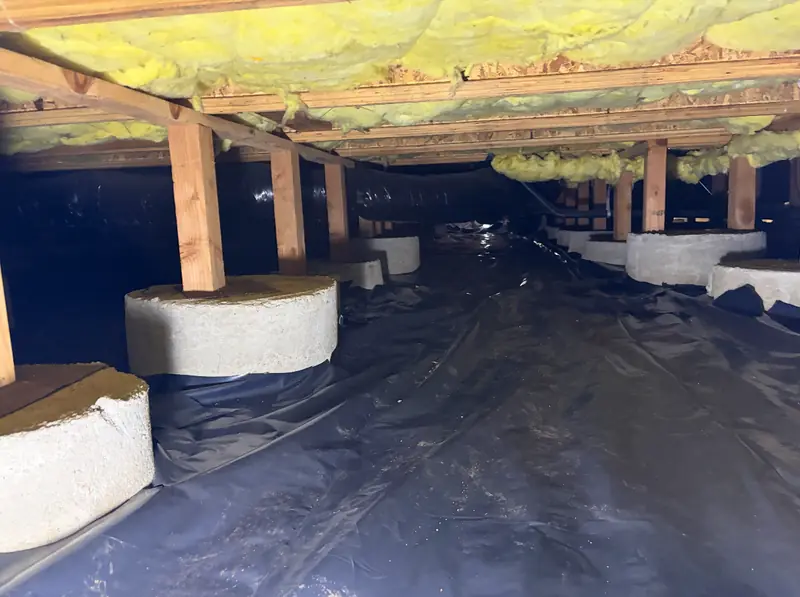
If you can look through the crawl hatch, insulation hanging down or lying on the ground is a strong clue. Moisture is one cause; pests and disturbance from service work are others.
4. Bare soil or failing plastic
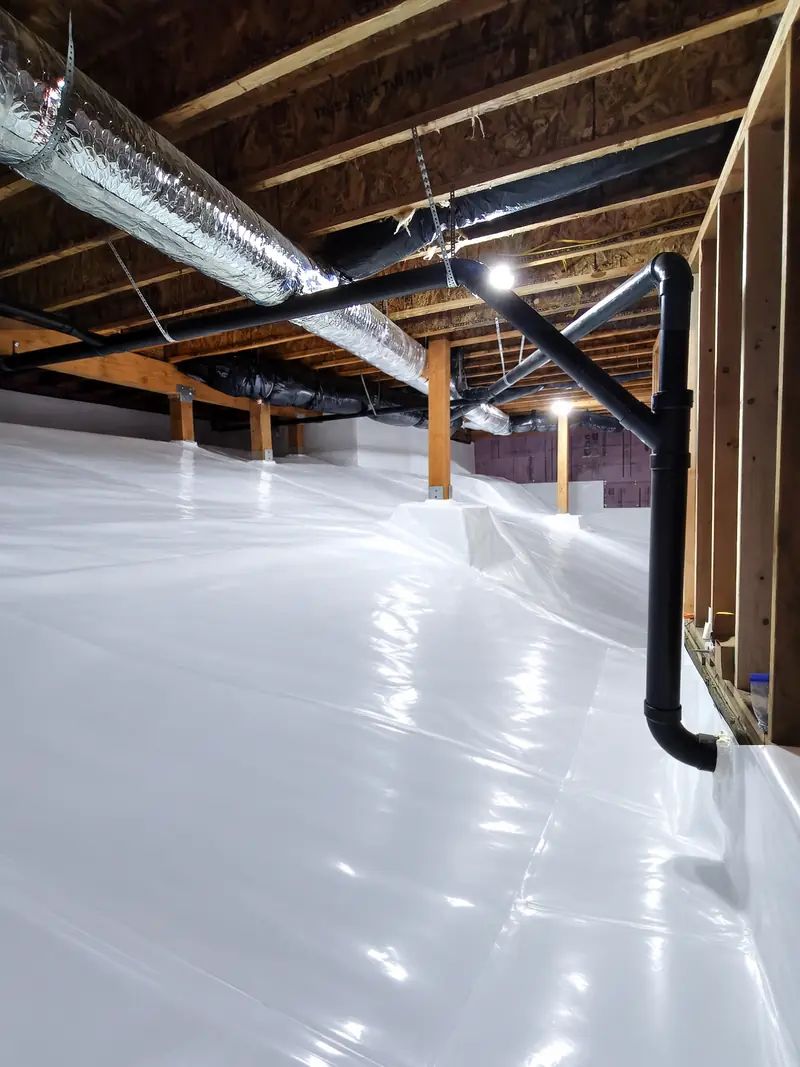
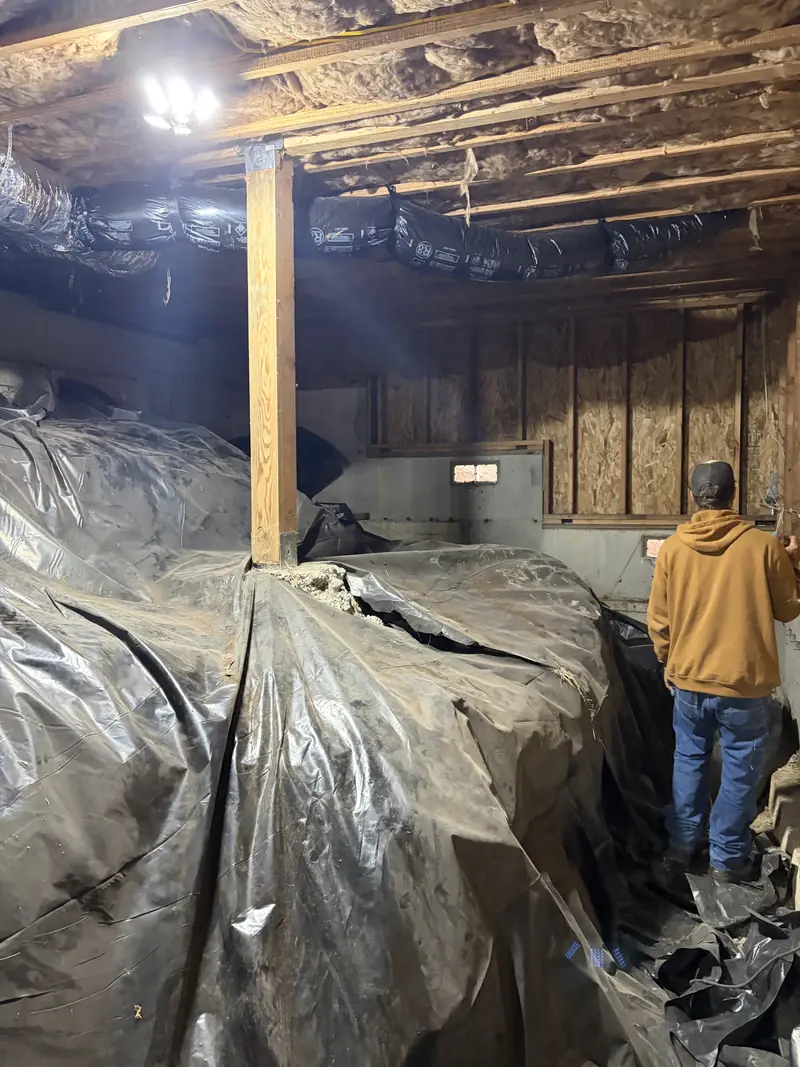
Exposed dirt, plastic that's torn, thin, bunched up or no longer overlapping — any of these let soil moisture into the crawl space air. A new vapor barrier is often a simple, effective fix.
5. Water or mud on top of the plastic
Water sitting on the ground cover means liquid water is getting into the crawl space and has nowhere to go. That's a drainage problem, not just a moisture problem. See crawl space drain systems.
6. Condensation on pipes or ducts
Sweating pipes and ductwork in the crawl space suggest humid air meeting cool surfaces. Over time, dripping condensation can wet insulation and wood below.
7. Dark, damp-looking wood
Framing that looks dark, stays damp to the touch, or has soft spots deserves attention. Persistent moisture can lead to rot and attract pests. If you see this, have the crawl space inspected — and if you see what looks like significant mold growth, ask for advice on whether a specialist is needed.
8. Pests that keep coming back
Many pests are drawn to damp, sheltered spaces. Repeated pest problems under the house can be a sign that conditions down there are inviting them in — along with damaged vent screens or gaps.
What these signs don't tell you
Each of these can have more than one cause, and some homes show several at once. A musty smell might be damp soil, wet insulation or something else entirely. Cold floors might be insulation, air leaks or ductwork. That's why the next step is an inspection rather than a guess. A good inspection will tell you:
- Whether there's liquid water, and where it comes from
- The condition of the ground cover and insulation
- Whether framing shows moisture damage
- Which fix fits: a vapor barrier, encapsulation, drainage, insulation — or a combination
Quick things you can check yourself
- Walk around the outside after a heavy rain. Are gutters overflowing? Do downspouts empty right next to the foundation?
- Look at the grade. Does soil slope toward the house anywhere?
- If it's safe, look through the crawl hatch with a flashlight. Note bare soil, water, hanging insulation or torn plastic.
Don't crawl into a space that's flooded, has exposed wiring, or that you can't safely get out of. That's what an inspection is for.
Have a question about your own crawl space? Call (360) 470-4956 or request a free estimate. Every home is different, and an inspection is the best way to know what's going on.