If you've started looking into crawl space moisture, you've probably run into two terms that sound like the same thing: vapor barrier and encapsulation. They're related, but they aren't interchangeable — and choosing the wrong one can mean spending too much, or not fixing the problem at all.
The short version
- A vapor barrier covers the ground in your crawl space so moisture from the soil doesn't rise into the space. The crawl space stays vented to the outdoors.
- Encapsulation seals the crawl space: a liner covers the ground and runs up the foundation walls, seams and edges are sealed, openings to the outside are addressed, and the air inside is managed.
- Neither one is designed to stop flowing water. If water pools in your crawl space, it needs drainage first.
What a vapor barrier does
Soil holds moisture, and bare soil gives that moisture off into the air above it. In a crawl space, that air surrounds your floor framing, insulation and ductwork. A vapor barrier — also called a ground cover or vapor retarder — is a continuous sheet of plastic laid over the soil to slow that moisture down.
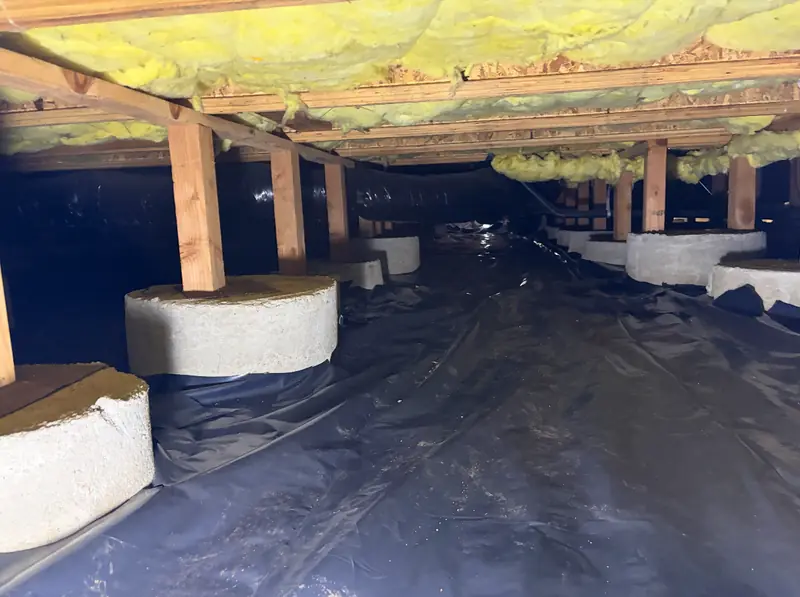
In Washington, the residential code calls for a ground cover in vented crawl spaces: six-mil (0.006-inch) black polyethylene or an approved equal, with seams overlapped at least six inches, extending to the foundation walls (WAC 51-51-0408). That's the baseline. Many older homes in Southwest Washington have plastic that's far older, thinner or more torn than that — or none at all.
A good vapor barrier is often the most cost-effective crawl space improvement a homeowner can make. When the crawl space is damp but not wet, it can make a real difference to how the space smells and how long insulation and wood stay in good shape.
What encapsulation adds
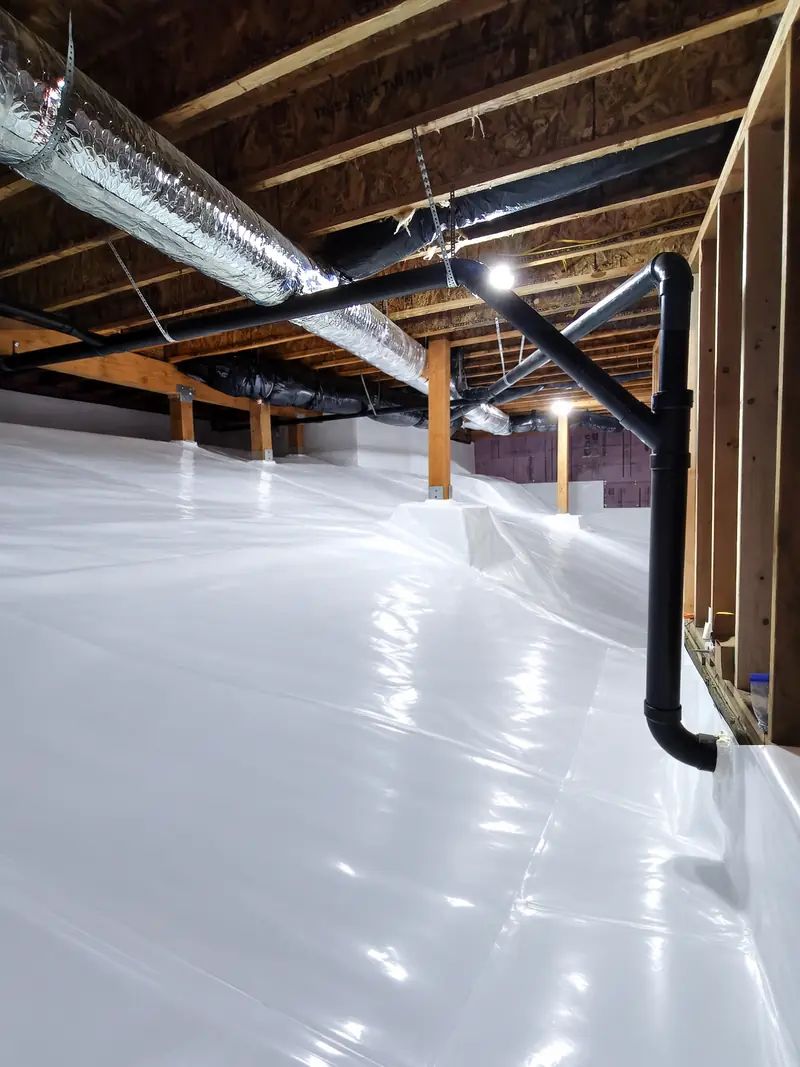
Encapsulation takes a different approach. Instead of covering the soil and leaving the crawl space open to outdoor air through its vents, it treats the crawl space as a closed space:
- A heavier, more durable liner over the ground
- The liner carried up the foundation walls and around piers
- Seams and edges sealed
- Foundation vents and other openings to the outside addressed
- A plan for managing the air inside — often a dehumidifier, depending on the home
Washington's code allows crawl spaces without vents when specific conditions are met, including a continuous Class I vapor retarder with sealed joints carried up the stem wall and the radon provisions the code references. How a closed crawl space ties into the home's heating, ventilation and insulation matters too, so encapsulation should be planned as a system, not just a heavier sheet of plastic.
Why it matters in Southwest Washington
Our wet season is long. Longview averages about 48 inches of precipitation a year, with November through January the wettest months; Battle Ground averages more than 52. In a vented crawl space, the vents bring in that damp outdoor air for months at a time. A vapor barrier reduces moisture from below; encapsulation reduces moisture from below and from outdoor air. That's why encapsulation appeals to homeowners whose crawl spaces stay damp or musty even with a decent ground cover.
Water comes first — always
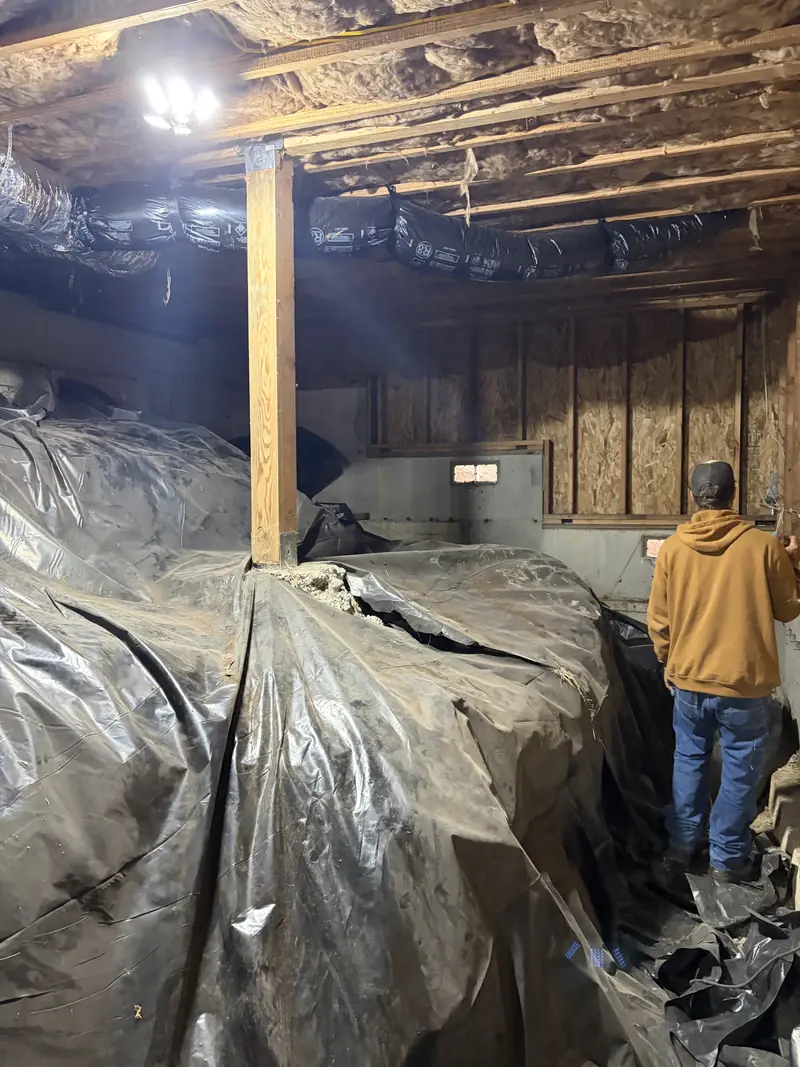
If water pools in your crawl space, sits on top of the plastic, or leaves mud behind every winter, neither a vapor barrier nor encapsulation is the first step. Plastic over standing water just hides it. The water needs to be collected and moved out with drainage or a sump pump, and sometimes with changes outside like gutters and grading.
Side by side
| Vapor barrier | Encapsulation | |
|---|---|---|
| Covers the soil | Yes | Yes, with a heavier liner |
| Runs up the walls | To the walls | Up the walls, sealed |
| Vents | Stay open | Addressed / closed |
| Air management | Outdoor air through vents | Managed inside the space |
| Typical cost | Lower | Higher |
| Stops flowing water? | No | No |
How to decide
A vapor barrier is often enough when the crawl space is damp but not wet, the main issue is bare soil or failed plastic, and you're looking for a sensible, affordable fix.
Encapsulation is worth considering when moisture or odors persist even with a ground cover, ducts or pipes are sweating, insulation keeps getting damp, or you want more control over the space under your home.
Either way, the right answer depends on what's actually in your crawl space — which is why we inspect before recommending anything. If a vapor barrier will do the job, we'll tell you.
Have a question about your own crawl space? Call (360) 470-4956 or request a free estimate. Every home is different, and an inspection is the best way to know what's going on.