A marble that rolls across the kitchen. A hallway with a dip in the middle. A door that used to latch and now swings open on its own. Uneven floors are one of the most common reasons homeowners look under the house — and one of the most worrying. The good news: in crawl space homes, the cause is often local and fixable.
How a crawl space floor is held up
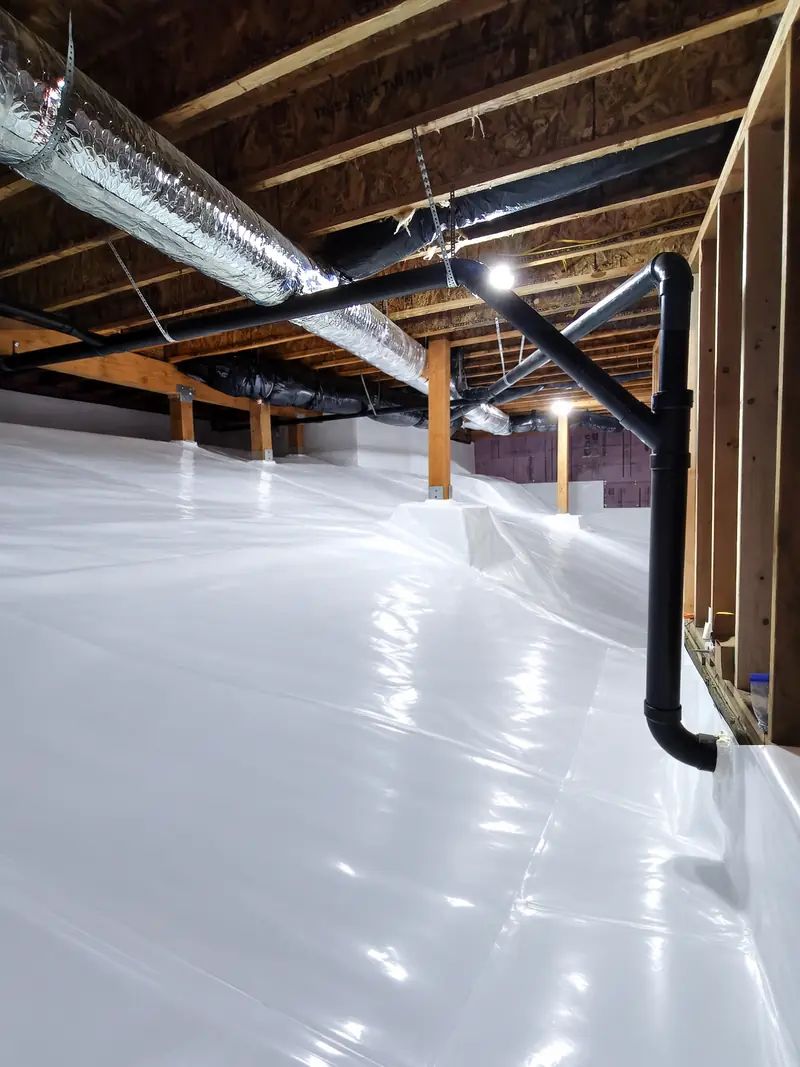
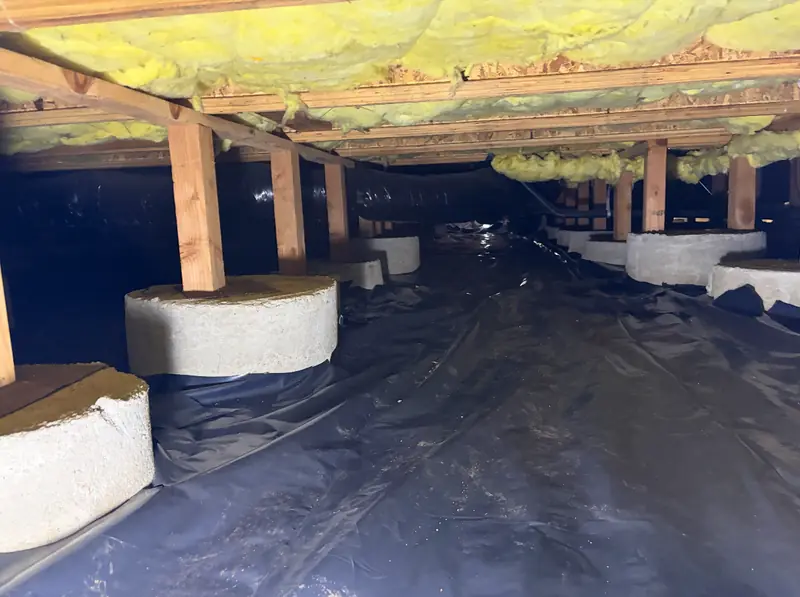
In most crawl space homes in Southwest Washington, the floor is built in layers. The subfloor sits on joists. The joists rest on larger beams. The beams are held up by posts, and each post stands on a concrete pier or footing. Around the outside, the floor framing sits on the concrete stem wall of the foundation. When any piece of that chain moves, the floor above follows.
The most common causes
1. A rotted, crushed or shifted post
Posts that sit in damp conditions — on soil, on wet concrete, in a crawl space without a ground cover — can rot at the base. Others crush under load or slide off their piers if they were never fastened. One failing post can create a noticeable low spot. Post and beam repair is usually a straightforward fix.
2. A pier that settled or cracked
Pier blocks set on soft or saturated soil can sink over time, especially in areas where the ground stays wet through a long rainy season. Older homes sometimes have piers that are just blocks set on the dirt rather than on a proper footing.
3. A beam sagging between supports
If posts are spaced too far apart for the size of the beam, the beam can sag between them — often seen as a gentle dip running along a line through the house.
4. Improvised or "temporary" fixes
In older homes, it's common to find supports made of scrap lumber, stacked bricks, wedges and shims added over the decades. They may hold for years, but they rarely hold evenly.
5. Moisture damage to framing
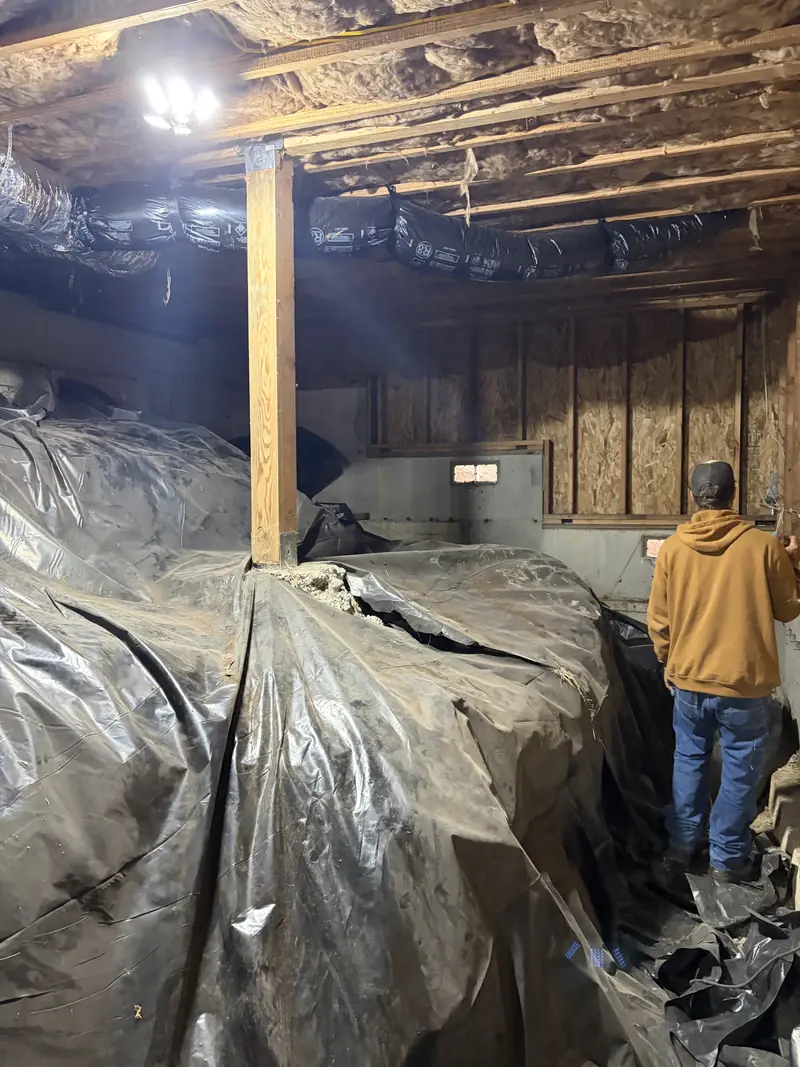
Persistent moisture can weaken joists and sills, particularly near plumbing leaks or where soil touches wood. That's one reason crawl space moisture and floor problems often show up together.
6. Changes from remodeling
Removing a wall, relocating a kitchen or adding heavy features can change how loads travel to the crawl space. If supports underneath weren't updated, the floor may respond.
7. Foundation movement
Less commonly, the perimeter foundation itself moves — through settlement, cracking or, on some hillsides, ground movement. This is the cause most people fear, and while it's often not the answer, it's the one that most needs a professional opinion. See foundation repairs.
Is it serious?
Some signs suggest a floor has been stable for a long time; others suggest something is still moving.
- Usually less urgent: a slope that hasn't changed in years, in an older home, with no new cracks.
- Worth checking soon: a soft or bouncy spot, a dip that's getting deeper, doors that recently started sticking.
- Call promptly: new or widening cracks in walls or the foundation, floors changing over weeks or months, or — on a hillside lot — signs that the ground itself may be shifting. In those cases, a structural or geotechnical engineer may need to be involved.
A simple way to track change: mark the ends of a crack with a pencil and the date, and check it again in a month.
Can every floor be made level?
Not always — and not always without trade-offs. Wood framing that has sagged for decades takes a "set." Forcing it back quickly can crack plaster and drywall and bind doors. The goal of floor leveling is usually to support the floor properly, bring it closer to level where the framing allows, and stop further movement. A good contractor will tell you what's realistic before starting.
What an inspection looks for
- Where the floor is low and by how much
- Every post, pier and beam under the affected area
- Moisture conditions that may have caused damage
- The perimeter foundation where the framing sits
- Signs that point to something beyond the supports
Most of the time, the answer is under the house and can be fixed from there. When it isn't, you deserve to hear that plainly too.
Have a question about your own crawl space? Call (360) 470-4956 or request a free estimate. Every home is different, and an inspection is the best way to know what's going on.