
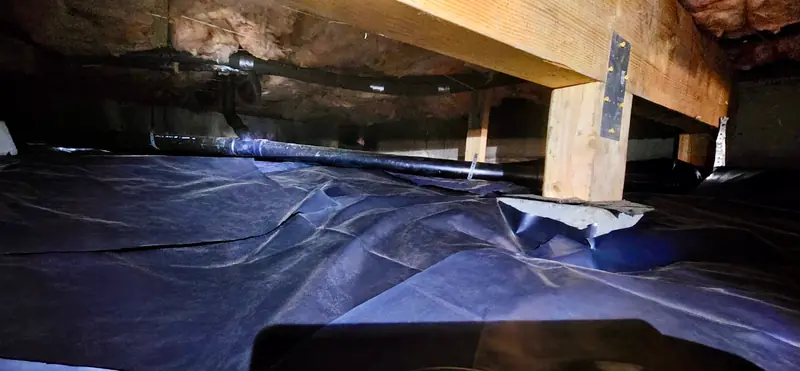
What we find under older Longview homes
Longview was planned and built in the 1920s, with many of its historic buildings from 1923 to 1934 and a wave of suburban homes in the 1960s. In crawl spaces that old, we often look for:
- Posts sitting directly on soil, or on stacked bricks and blocks
- Posts that have rotted at the base from damp soil
- Shims and wedges added over the decades
- Pier blocks that have cracked or sunk
- Beams with long spans that have sagged between supports
We check every one of these during the inspection.
How we repair it
- Replace rotted or improvised posts
- Add posts where spans are too long
- Replace failed pier blocks with proper supports
- Add metal connectors at the top and bottom of posts
- Adjust carefully to reduce sag where the framing allows
We'll walk you through how much an old floor can be brought back. See floor leveling in Longview.
Fix the moisture too
Posts usually rot because they sit in damp conditions. Longview's long wet season makes that common. We look at the ground cover and drainage at the same time, so new posts aren't set up to fail the same way. See vapor barriers in Longview.
What affects the cost of post and beam repair in Longview
Repairs under older Longview homes vary from a single post swap to a full line of new supports. The main factors:
- How many supports need work. One rotted post is a small job; a beam line of improvised supports is a bigger one.
- Pier condition. Reusing sound piers is simpler than replacing cracked or sunken ones.
- Beam damage. Rot or splits in the beam itself add reinforcement or replacement.
- Access. Low clearance in some 1920s crawl spaces slows the work or calls for a dig out.
- Moisture fixes. A vapor barrier or drainage so new wood stays dry.
What to notice before we come out
Walk the house and note which floors dip, bounce or slope, and in which direction. Check whether doors in those areas stick or drift. If you can safely look through the crawl hatch, note any posts sitting on bricks, blocks or bare dirt. If you know of past remodels — a wall removed, a kitchen moved — tell us; changes upstairs often explain problems downstairs.
Questions from Longview homeowners
My Longview floor has dipped slowly for years. Is it a post problem?
Often, but not always. Settled piers, sagging beams and moisture damage are all possible. We'll find the cause.
Can you replace posts without disturbing my floors?
Posts are replaced with temporary support in place. Adjusting a long-sagged floor can affect finishes, and we'll talk that through first.
How do I get an estimate?
Getting started is easy. Call or text (360) 470-4956, or fill out the form on this page. We'll learn what's going on beneath your home, schedule a time to take a look, and give you a straightforward post and beam repair estimate.