
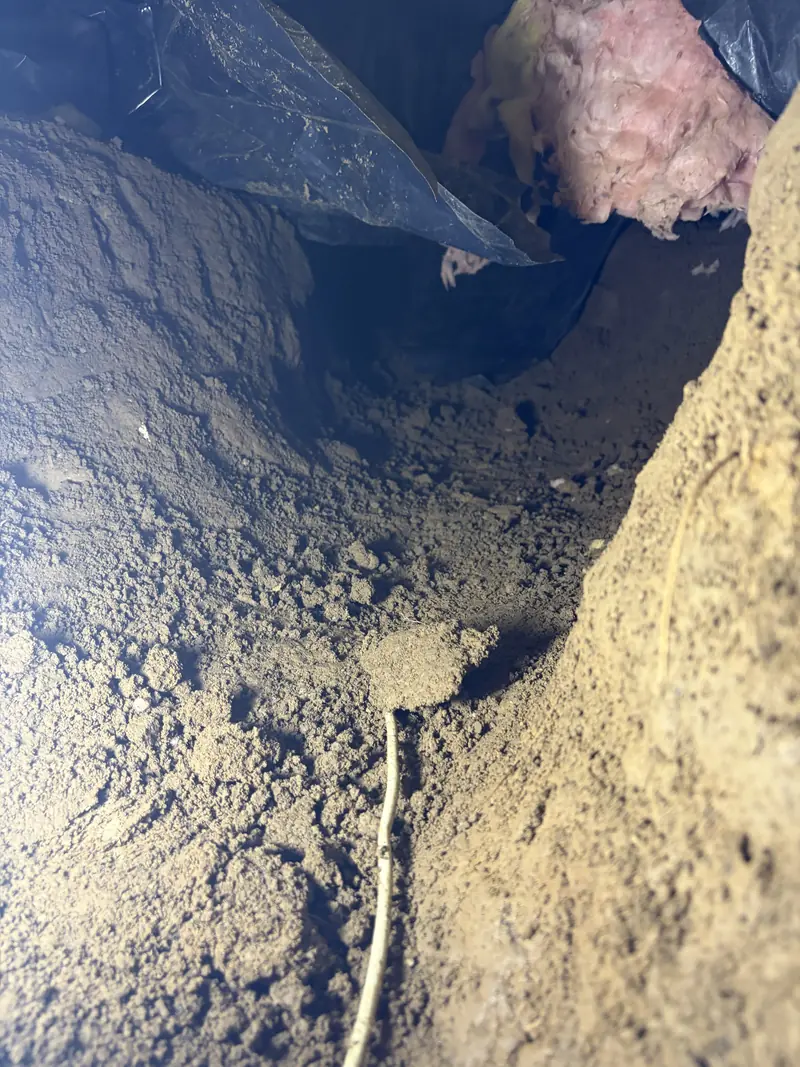
Why some Longview crawl spaces are so tight
Clearance standards and building practices have changed a lot since Longview's first homes went up in the 1920s. Some older homes were built with very little room underneath, and soil has sometimes been piled up over the years. When there's no room to crawl, insulation, plumbing and posts in those areas go unchecked.
What a dig out can involve
- Access trenches to reach blocked areas
- Lowering high spots for working room
- Pulling soil back from wood framing
- Room around posts for structural repairs
- Trenching for drainage
Done carefully
Soil supports footings and piers. We plan how much can be removed and where, and we won't dig in a way that undermines the foundation. On low ground near the rivers, lowering the floor can also affect how water collects — so we usually plan a dig out together with drainage and a new vapor barrier.
What affects the cost of a dig out in Longview
- How much soil needs to move
- How tight the space is to work in
- Whether soil stays in the crawl space or is removed
- Distance from the hatch to the work area
- Drainage and barrier work planned with it
Is it worth it?
If there's a problem you can't reach — a sagging beam, a leaking pipe, wet soil against a sill — a dig out is often the only way to fix it properly. We'll tell you whether a dig out is the right approach for your crawl space.
Questions from Longview homeowners
How low is too low?
If a person can't safely reach an area to inspect or work, it's worth discussing. We'll measure.
Will a dig out make my Longview crawl space wetter?
We plan drainage alongside every dig out, so water is handled from the start.
Where does the soil go?
It's regraded or removed, depending on the plan.
How do I get an estimate?
Getting started is easy. Call or text (360) 470-4956, or fill out the form on this page. We'll learn what's going on beneath your home, schedule a time to take a look, and give you a straightforward dig out estimate.