
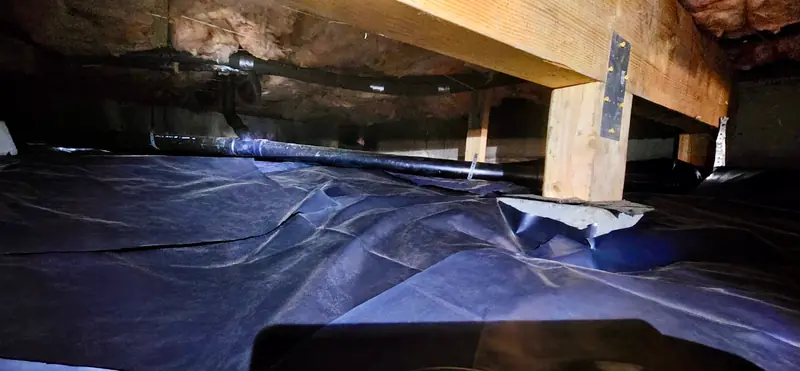
Why Longview floors slope
Floors in Longview's older homes — from the 1920s planned-city era through the 1960s suburbs — can drop for many reasons: a post rotting at the base, a pier block settling in damp soil, a beam sagging between widely spaced supports, or changes made during past remodels. Some floors have been out of level for decades and are stable; others are still moving.
What the work involves
Typically replacing or adding posts and piers at the right points and adjusting them carefully. If a perimeter foundation issue is involved, see foundation repairs in Longview. If moisture caused the damage, we address that too.
What affects the cost of leveling in Longview
- How much of the floor is affected
- Number of supports to repair or add
- How far the floor has dropped and how much can safely be recovered
- Access in older crawl spaces
- Moisture repairs
Measuring and expectations
We measure the floor before work so you can see where it's low and by how much — and see the improvement afterward. In older Longview homes we focus on making floors flatter, solid and stable while protecting your finishes.
Questions from Longview homeowners
My 1920s Longview home has sloping floors. Should I worry?
It's worth a look. We'll inspect the supports underneath and give you a clear plan to level and support your floors.
Can you make it perfectly level?
We bring floors as level as the house allows while protecting your finishes, and we'll walk you through what to expect before work begins.
Will leveling crack my plaster?
Any adjustment carries some risk to finishes. Gradual, careful work reduces it, and we'll discuss it first.
How do I get an estimate?
Getting started is easy. Call or text (360) 470-4956, or fill out the form on this page. We'll learn what's going on beneath your home, schedule a time to take a look, and give you a straightforward floor leveling estimate.